

Imagine getting married at a gallery opening in 1969. The crazy part is, well, getting married in the public eye. Now imagine getting married at a gallery opening in 2026. What’s unhinged about that is no longer the limelight on your intimate affair but the fact that there is an Opening Of a Gallery, á 400+ m2 in Soho downtown New York; Every other partner is brave enough to propose to their future wife Sara Apple Maliki, nonetheless if she is a strikingly beautiful, ambitious woman, but not everyone – nearly noone – is brave enough to take a chance on a space this big, in a market this low, with rents skyrocketing.
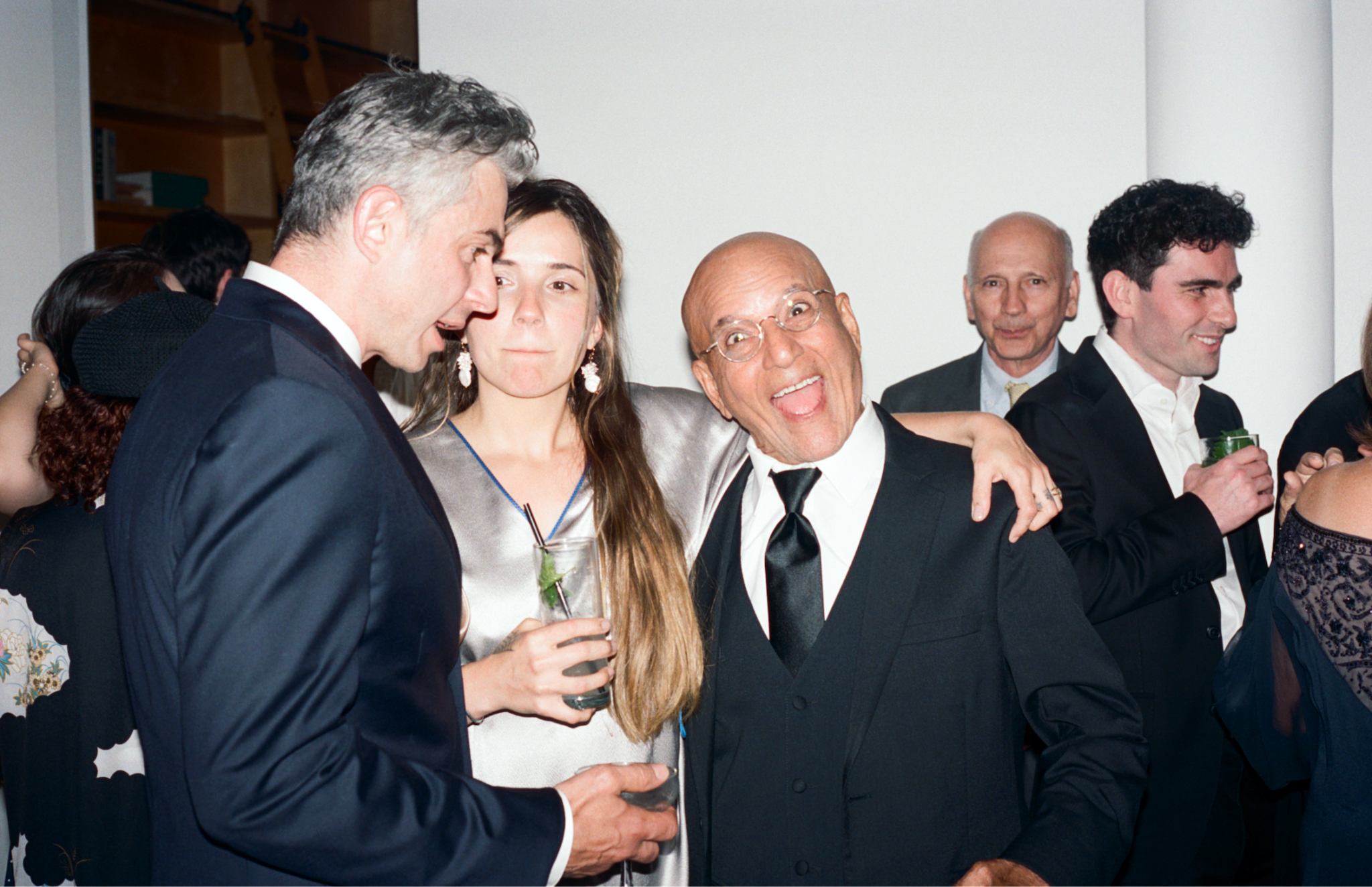
“I’m not an artist” says Pietro Alexander, while pulling his hair on the couch as big as my Paris flat. Sure thing, yet this opening stands as real world evidence to Alexander’s position not just as a visionary, but an artistic outlaw. The bloodlined dealer is breaking the rules of how reality would have it, of what a strategist, market-analyst, or art-advisor might possibly tell you to do. This approach is not the Pietro Alexander Gallery’s UPS, it’s his UPS: Pietro Alexander the person’s Uniquely Personal Spectacle, together with his wife, 200 guests, and some 200-300 people wrapping the que around the blocks of Soho. The wedding itself is not a performance or a spectacle per se but the couple’s way of uniting their worlds under one roof and inviting us all, you as much as I, to be part of it.
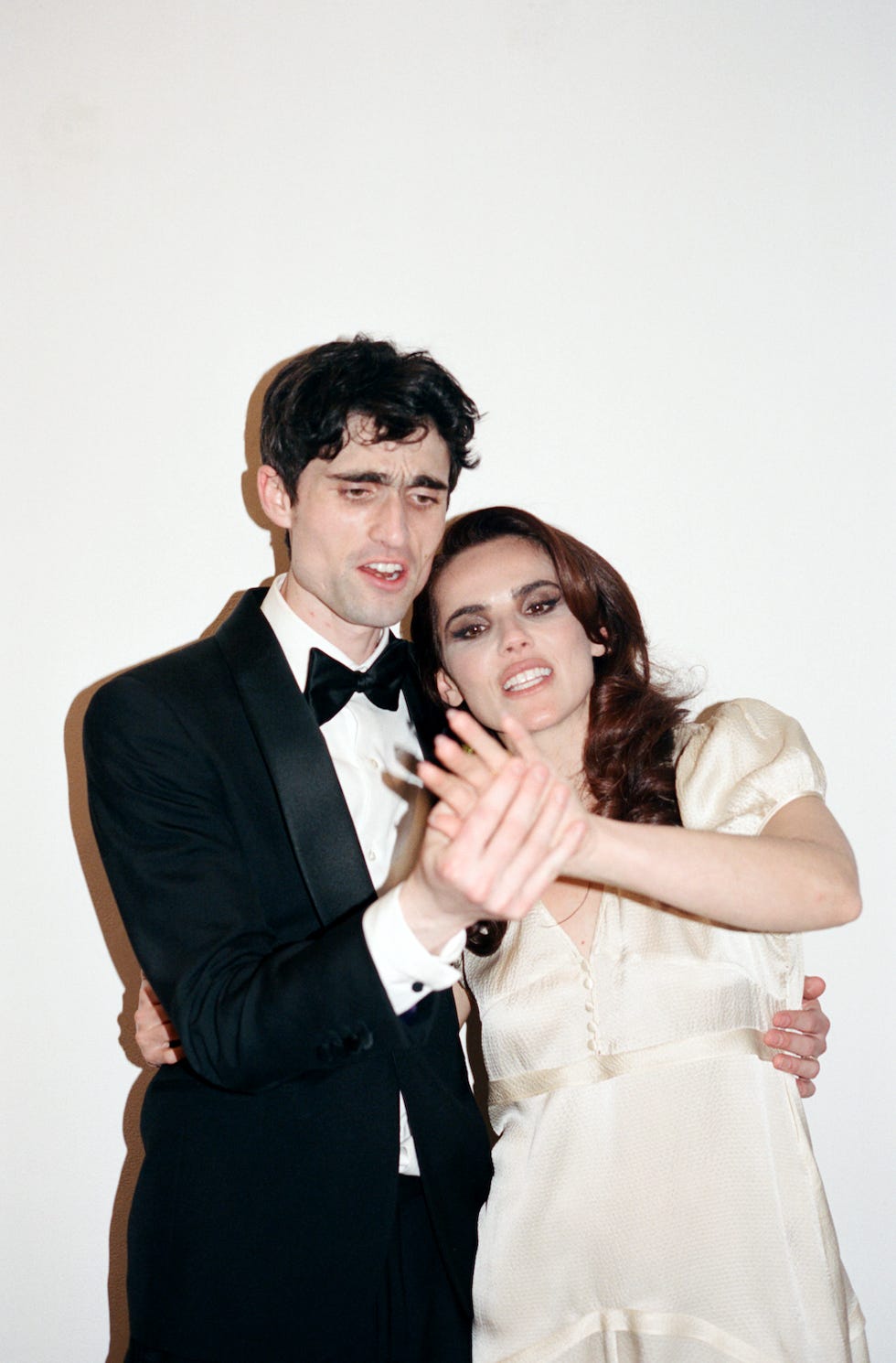
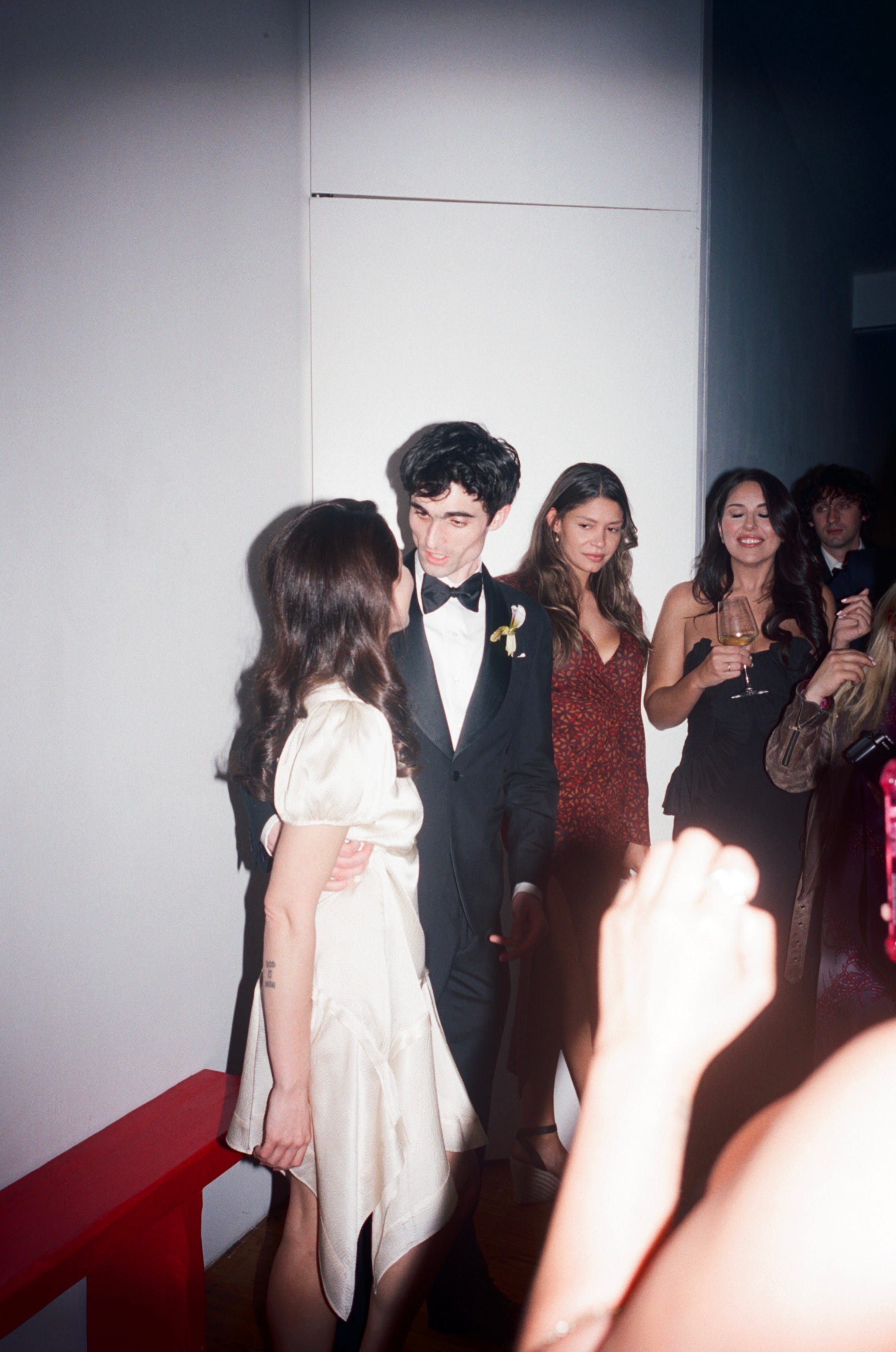
Sara Apple Maliki is wearing vintage Dior by John Galliano. He is wearing Ralph Lauren Purple label. I am wearing the least wrinkly dress from my three-cosmos-ten-days poorly-equipped-fairly- overweight cabin bag, a somehow reversed European jetlag, and a heavy dose of Chanel number not five. As for the gallery, whose dressed in not transatlantic, but cross-country, historical, and custom-made works of art.
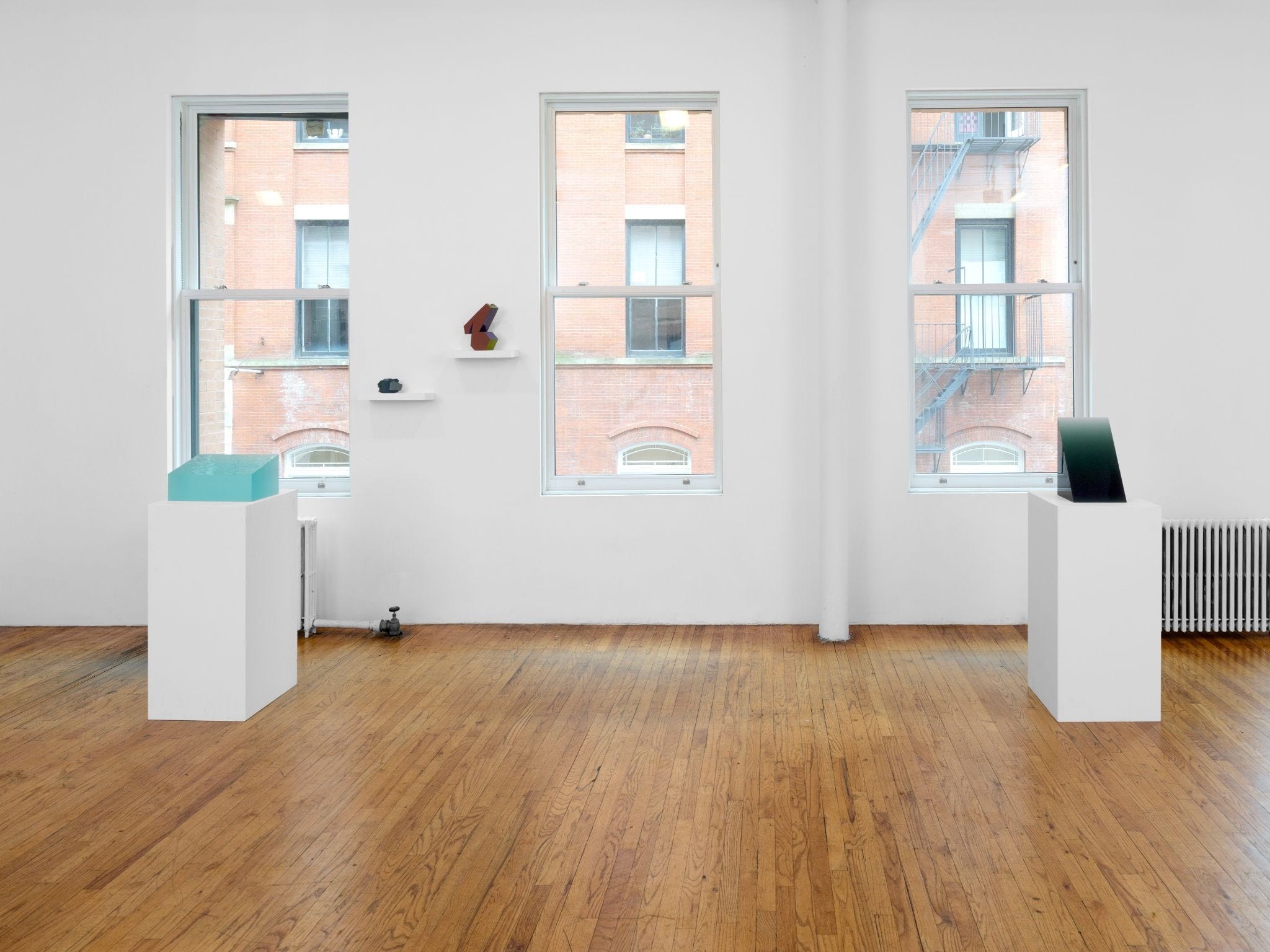
The inaugural show, the props of the wedding, the decor of life-long promises or whatever you’d like to frame it as, is also a curation of life-long commitments and emerging endeavours. In returning to the address once belonging to his late uncle and aunt, Alexander is uniting past and present, a curatorial methodology with which he plans to establish the future to come.
Now do you take 59 Wooster Street to be your playground, nonkrong (cc Kline, 2026), sanctuary, til death do you part? I do! Marry me. Please Ms and Mr marry all of us.
In the following conversation, Pietro Alexander and Vilda Krog speak about his restlessness, access, the Los Angeles movements he was brought up on, the JPEGS and the egos.
Pietro Alexander: The challenge for almost every gallery is that the emerging price point is, in many ways, a non-functional business model. You can sustain yourself, pay yourself very little, and show artists whose work is priced below or slightly above $10,000. But unless you’re selling out every single show—which you’re not—how are you supposed to grow with the artists you’re fostering?
How are you supposed to take them to art fairs? How are you supposed to hire staff, publish books for exhibitions, and do all the other things that are important but require more time, labour, and focus?
You simply can’t do that at the emerging price point.
So how do you do both? A lot of galleries solve this by mixing their programmes as they grow. They’ll have some shows featuring emerging artists and others featuring very established artists.
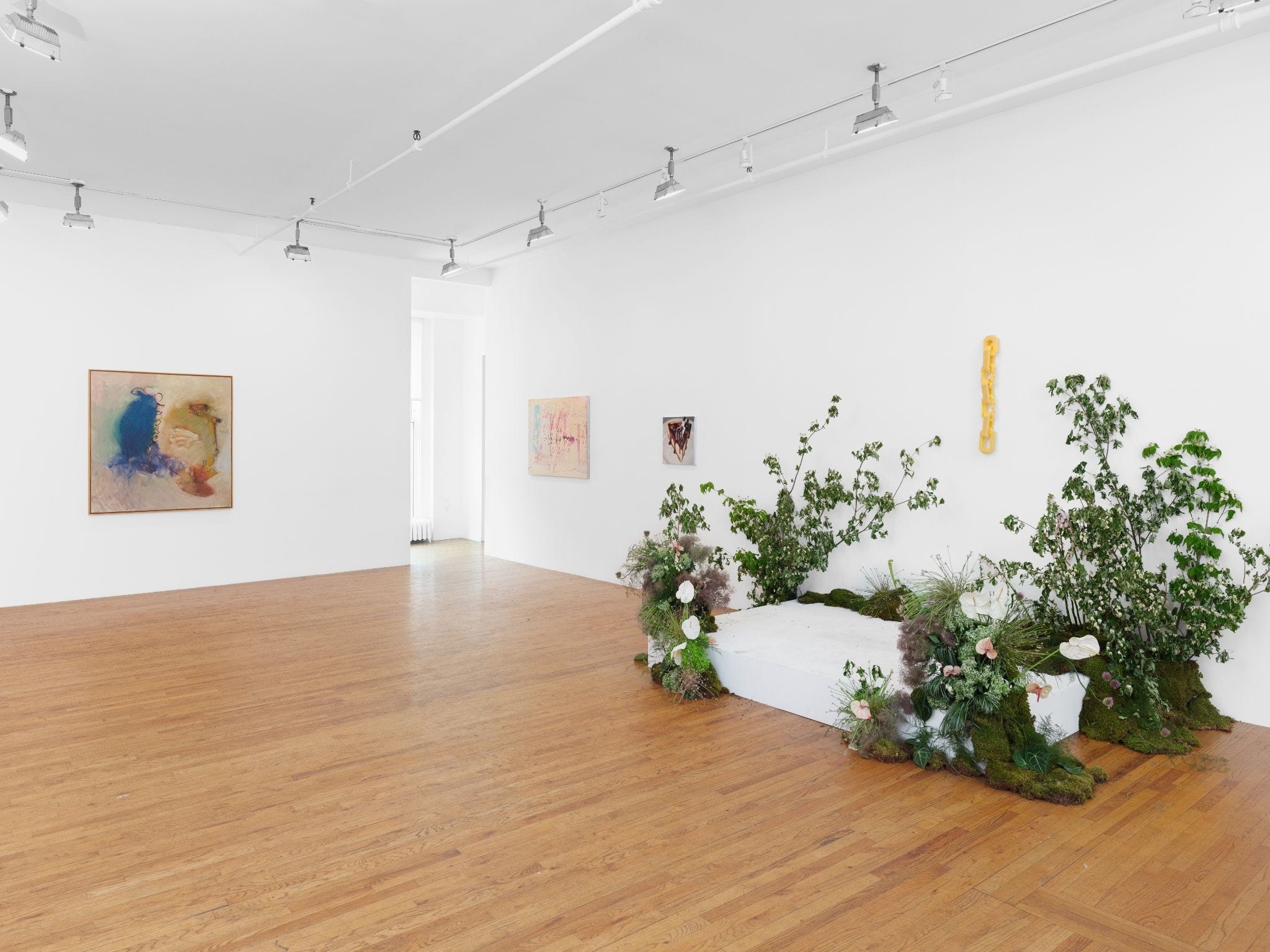
That’s similar to what I’m doing here, but with a different approach. Rather than having historical work tucked away in a back room, I’d like it to be part of the programme itself.
This room, for example, is entirely 1960s work.
Vilda Krog: I don’t think I saw this room the last time I was here, two years ago.
Alexander: No, we didn’t have anything in this room then.
The idea is to bring what would traditionally be in the back room—the work you take people aside to see—and make it part of the front-facing programme, instead of treating it as something you’re quietly doing to support the business.
Krog: Why bring it to the front?
Alexander: The idea of drawing a connection between contemporary work and the long arc of art history really interests me. It’s a very conscious, almost meta, way of building a programme.
I also think the two kinds of work benefit each other. It’s a symbiotic relationship.
Contemporary work gains context. Why does this work exist? Why is it being shown? What led to it? Who is it in conversation with? Historical work, meanwhile, gains vitality. It can stop feeling like an antiquity or a relic and instead feel alive.
Particularly with the works in this exhibition, most of them are vintage Venice Beach works thus I’m biased, of course, but if I didn’t tell someone these pieces were fifty years old, I don’t think they’d know. There’s an immediacy to the work that feels timeless.
I think that’s something that could be especially interesting for a New York audience that’s less familiar with these artists.
Krog: If we backtrack a little, when did you decide you wanted to move to New York?
Alexander: When I met Sara. At first, I didn’t think I was going to move completely. But then I decided to close Spy [Spy Projects was Alexander’s previous LA Gallery 2021-25.]
Krog: Which raises another question—why didn’t you want this to be a continuation of Spy? That was what it was when the two of you together, Sara as the curator, took over the space in 2024.
Alexander: Partly because of practicality. One thing I’ve learned is the importance of understanding your own bandwidth and putting your time where it’s most valuable. If I tried to run the same kind of programme I ran at Spy in a space this size, it would have been impossible. Or I would have been miserable.
Spy originally started with two other people. Eventually they left, and I became the sole person running it. Even though I technically could have changed the name at some point, it still felt like Spy. I was showing similar artists and running it in the same way. Changing the name would have felt strange because the identity belonged to that space.
This is different.
The programme is going to be different. The philosophy behind what I’m showing and how I’m showing it is different from what I’ve done earlier. It then felt right for the name to change as well.
I also like the idea of acknowledging the history here. It gives me a sense of confidence, maybe even safety. I can look at the wall and think, “If my uncle could do it, maybe I can too.” Coming back to why bringing the back-work to the front, that also addresses the obvious question people have when they walk in: how is this happening? Rather than avoiding that question and pretending it does not exist or impact why we are where we are I’d rather just tell the story.


Krog: How has your forthcoming programming had to change in relation to your previous savvy practice?
Alexander: The biggest difference is the historical component, the legacy works and household names. I didn’t show these artists in Los Angeles. I considered it, but didn’t feel like I would be adding anything meaningful to the conversation. Here, though, I think there’s room to advocate for them and support them in a way that feels relevant and new.
At the same time, I want that historical side of the programme to support the emerging and contemporary artists I’m showing. I don’t want those two worlds to feel completely separate, not even separate at all.
Krog: Are they seen as separate in Los Angeles?
Alexander: I think so. Artists like Altoon, Bankston, and Ken Price are foundational Los Angeles artists. They’re part of the first major generation of what became known as LA art.
When the broader art world rediscovered Los Angeles art history, it largely started with the artists of the 1960s, the Cool School, Finish Fetish…
The piece behind you is by John McLaughlin, who’s slightly earlier, but generally speaking there’s a huge difference between how familiar people are with these artists in Los Angeles versus New York.
Krog: I meant between generations, I took for granted that the household names in LA at the very least rings a bell on the East coast as well.
Alexander: Sure but barely, depends on who you are talking to. It’s more regional than you think.
That’s not to say these artists have never shown here before. Franklin Parrasch has shown several of them. I believe the Donald Judd Foundation had a Bob Rowan exhibition at one point. Laddie John Dill has shown in New York as well. But they’ve never had the same level of visibility they’ve had in Los Angeles, it’s always been a distant story.
Krog: Is it your mission then to introduce Los Angeles artists to the New York audience?
Alexander: That’s naturally going to happen because those are the artists I know. Those are my people.
That said, I’m not going to pigeonhole myself and say I’ll exclusively show Los Angeles artists in New York. I’ll show whatever work I think is excellent and whatever work I think New York needs to see.
Right now, this is the work I think New York needs to see. But I also moved because I felt Los Angeles was changing. Maybe “changing” isn’t the right word. It felt more like a changing of the guard, and it made me feel differently about my future there.
After the fires, I had to leave my apartment in Santa Monica. The water had been contaminated, and the fire came within a couple hundred feet of my house. I didn’t want to continue living next to what felt like an environmental hazard. I moved into my dad’s old studio. All of my clothes stayed in boxes. I essentially lived out of a suitcase for nine months.
Suddenly I was facing another move within Los Angeles. And I thought: Sara isn’t moving to Los Angeles. I’m not moving in with her there. If I’m moving anyway, why not move to New York? Part of me felt I needed to show Sara that I was serious about us living in the same city. Anything else felt like a step backwards even though I had no clear idea how I was actually going to make the move to New York.
Usually I have a sense of what the next step looks like. I can see where I want to be in five years and how to get there. But what I wanted seemed farther away in LA than it had before, and I didn’t want to spend years waiting for it. Whereas with New York, there were a lot of things that had to fall into place that were completely outside my control; There’s enormous risk in a move like this. But I’d rather attempt something ambitious and fail than never try at all. I’d rather launch and explode halfway to the atmosphere than stay on the ground forever.
One thing I appreciated about Spy was that there was room for experimentation. There was room to fail. There was room to learn on the fly.
And I’d like to make more mistakes.
Maybe not huge mistakes at this scale, but mistakes nonetheless.
Krog: You were already talking about this two years ago when I met you and Sara at the very same address. You kept telling me, “We’re coming next year,” and I remember thinking that sounded like quite a gesture.
Alexander: A lot of factors went into it. I’ve been improvising for six years, and honestly I’m still improvising.
There was a real shift in the market around late 2023 and early 2024. Suddenly my sense of what I could safely predict financially became much less certain.
I didn’t want to make this huge life decision, move to New York, and then end up unable to pay rent because I’d chosen the wrong moment to make a dramatic move while everyone was panicking about the market.
Krog: What’s fun (or hell) about the ‘market’ is how less quantifiable it is in relation to other markets.
Alexander: Exactly. I was talking to a friend recently, and she was saying how tired she is of people constantly talking about the market. Her point was: with all the time people spend talking about the market, they could just take a client out to dinner instead. And I think she’s right.
Anyhow, I put on my patience and waited another few months. Eventually I decided it was time, or I grew restless.
People ask whether the market is bad. From my own experience, I felt a shift, absolutely. But that doesn’t mean there are no opportunities.
Krog: That’s what’s refreshing about this. I keep hearing the same conversations over and over, rent, real estate, celebrity artists, no time, no space. At some point somebody has to throw something unlikely against the wall and see if it sticks. For a while I felt, and still feel, that people stopped doing that.
I don’t think people are afraid to take risks, rather than having forgotten what a risk even looks like. Until this came along…
Alexander: People got used to a period when you could text somebody a JPEG and immediately make a sale.
It’s different now.
Everything depends on context and on the specific identity of each space. What I want is for this place to be fun. I want to throw big parties, dinners, and conversations here. I want people to enjoy being here.

Krog: When you look back at things like the Cool School or Finish Fetish, those were real movements. Artists were connected through communities and shared contexts. Today it feels like those kinds of movements barely exist. Is this something you’re now trying to foster?
Alexander: I wish I could say yes. But honestly, no. I’m a firm believer that those movements emerged organically from the artists themselves.
Krog: But they still needed spaces and meeting points; infrastructure and each other.
Alexander: Absolutely. And I hope something develops out of this space that I have absolutely no control over. I hope people meet here, connect here, make things happen here. But I don’t think it’s my role to manufacture a movement.
I’m not an artist. What I can do is provide a setting where something meaningful might happen.
The same way a gallery provides the conditions for a great exhibition, I can provide the conditions for people to gather and exchange ideas.
The rest has to happen naturally.
And from everything I was told growing up, those earlier movements emerged partly out of isolation. The Venice Beach artists weren’t looking at what everyone else was doing. There was no internet. They weren’t constantly consuming each other’s work from across the globe. They were responding to the environment directly around them. And I don’t think there’s a huge difference between the art being made in Los Angeles and the art being made in New York today. The biggest difference is that artists in Los Angeles generally have more space. They have larger studios. Production costs are lower. They can experiment more freely.
I’ve visited studios around LA where artists have ceilings twenty feet high and are making paintings or sculptures that fill the entire room. Where can you realistically do that in New York? And if you can, how much does it cost?
That reality shapes the kind of work artists are able to make.
One thing that’s important to understand is that innovation often comes from the environment around artists.
Take Finish Fetish, for example. The resin pieces, vacuum-formed plastics, and industrial materials those artists were using weren’t invented in art studios. They were technologies being developed by aerospace and engineering companies like Raytheon and Boeing down in Long Beach.
Those materials and processes migrated into the art world because artists encountered them in the culture around them and started experimenting.
That’s what drives movements. That’s what drives innovation. Art responds to the world around it.
So my hope is that something happens here that I can’t predict and can’t control.
Maybe in ten, twenty, or thirty years, someone is trying to explain a body of work that was shown here in 2026. Maybe they’re writing an exhibition catalogue or trying to place it within a historical narrative.
I hope they can point to this place and say that something meaningful happened here. But who knows?
Maybe none of it will work.
Two years ago I visited Pietro on the occasion of his first (pop-up) exhibition in the space, he was then quick to tell me that ‘you’ve got to have a serious ego problem to own a gallery.’
As I’m leaving him the day before the wedding, late this May, I ask him what happened to that ego, he seems so down to earth, almost too humbled.
“Now when I’ve got a gallery that matches the size of it, I don’t have to throw it around as much.”
Interview by Vilda Krog
Contributor, The Art Bystander