

In September 2026, Selma Morshedi participated as the fourth and final artist invited to STUGAN, the one-week artist studio residency launched by RMV Music in collaboration with The Art Bystander.
RSVP for the vernissage on Friday September 11th.
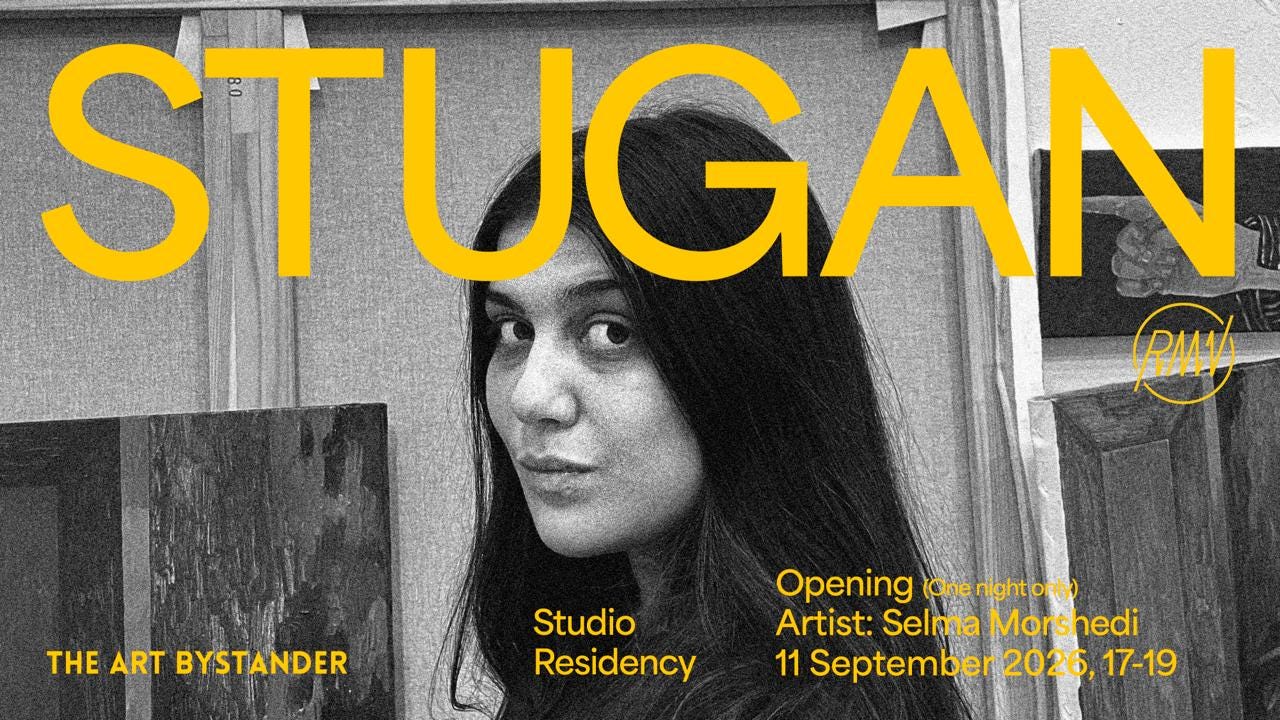
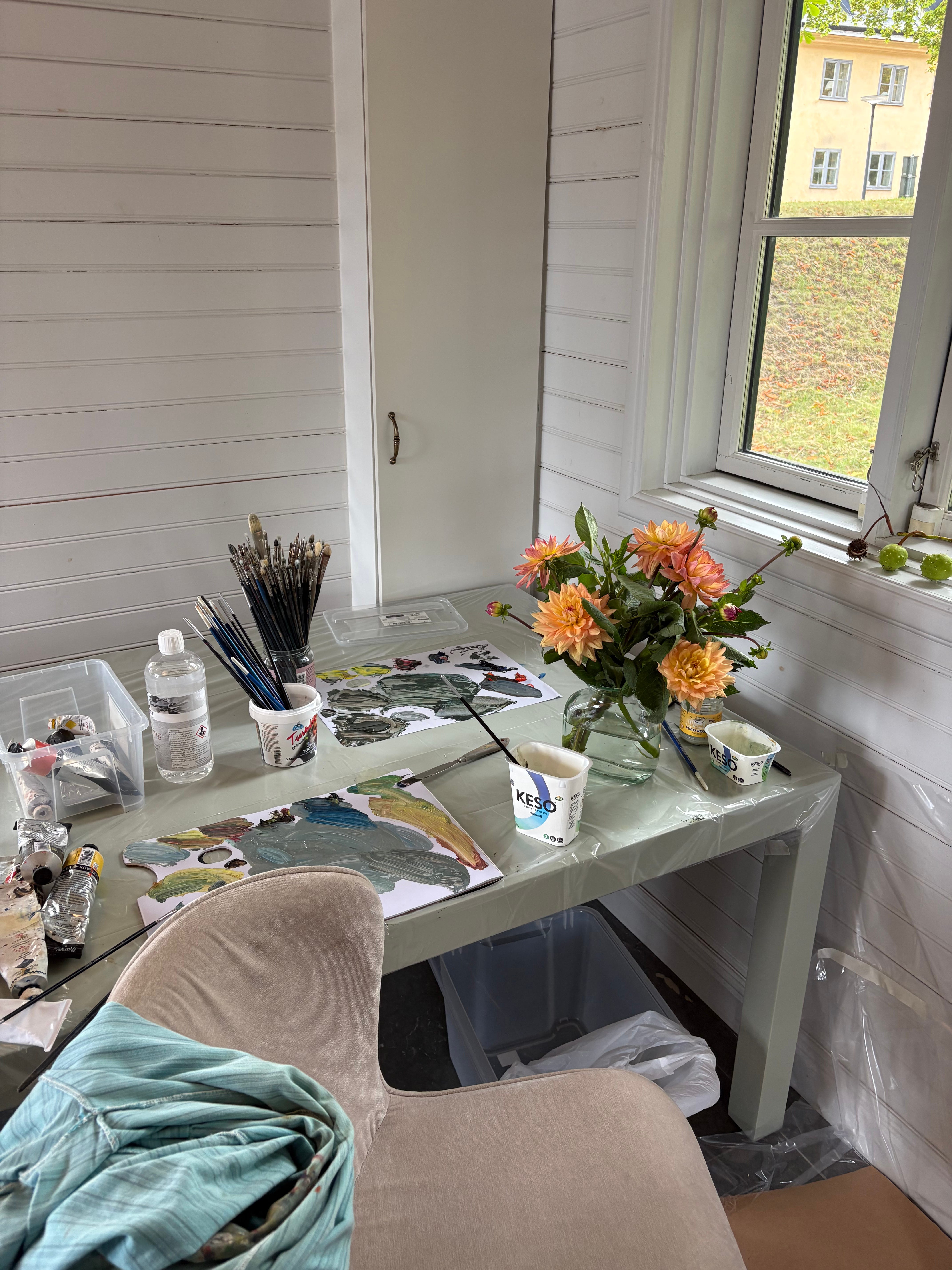
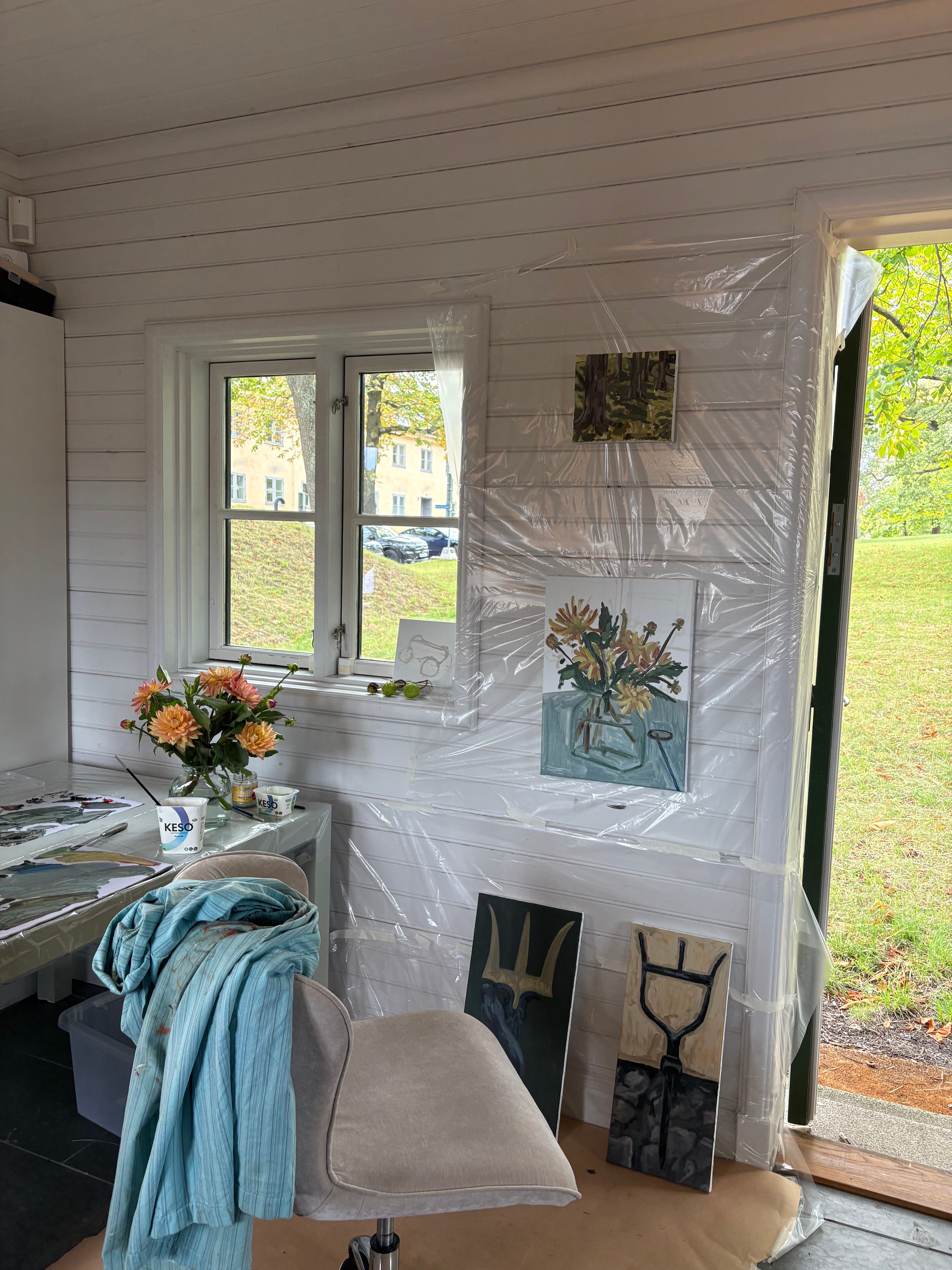
Located in a small cottage on the eastern side of Skeppsholmen STUGAN is built around a deliberately concentrated format: one artist, one week, one newly created work.
It is no longer summer but I’m back on the boat. It’s not an open deck so it dosent really matter what season it is. I try to take it everytime when I go into the city (from the archipelago) because it is what I would refer to as a kind transition into city life. A wavy one. A non highway, trafficked, red-light one. It’s all waves and water. And, once you look up from your bluelight screen every now and often; there it is, blue Baltic sea. Or at least the beginning of it.
Selma Morshedi motifs have yet to touch the sea although her motifs – split into narratives and symbols, as we soon will discover – are as filled with emotion as I like to think that the ocean is. Some of them come crashing, heavily loaded with messages whispered in silence yet somehow delivered with an explosion. Others are less emotional, more relational, relateable, all of them recognizable; she paints what is right in front of us, or, in front of her, but delivers reality in a painting that is oftentimes beyond what’s right there in front of us, instead, it is right there inside of you. A feeling you knew you had but somehow lost access to. It is found again in her paintings. The self, the emotion, the parts of life that make up the whole that I guess is the totality of it all. She makes the pieces visible due to the way she appropriates them as not the first but as the last. Likewise does the impact her physical landscapes make, last.
Morshedi is a Swedish painter and recent graduate from the MFA program at Royal Academy of Arts, Stockholm. Her painting deals with themes including mirroring, identification, and is an exploration of forms of the historical narrative. Her work articulates the recesses of the human spirit, without recourse to the discourses of biology or psychology.
Vilda Krog: Why do you paint?
Selma Morshedi: When I was kindergarten is when I first encountered what it could be like as an artist; we had a Polish woman as our art teacher and a great studio space. With her, we just painted a lot. That was all the encouragement I needed. And a Picasso book, but that came later on.
And eventually, the history of the arts. In regards to painting, I personally think it is important to know where you are coming from – where and how you are inserting yourself into the visual dialogue, or not.
That’s quite a distance from painting at kindergarten to entering the discourse of art through your own visual language.
I got the history part from home. We went to museums frequently... A family member of mine is an art historian and it had its fair share of impact. I spent a big part of my childhood in the churches painted by Albertus Pictor.
Who was Albertus Pictor?
A German painter who came to Sweden in the Middle Ages and painted churches around the Mälardalen Valley. My family member wrote a PHD thesis on him. I followed along to lectures, meetings, and research excursions. I’d assume that Albertus had an impact in ways I’m not even aware of.
Perhaps in relation to your symbolism? Not that you paint religious symbols, but your motifs, are they not painted as signifiers of…
Actually, I have painted many angels… I am very interested in symbolism. During my MFA studies I realized that I had two categories, two approaches to my painting; one is narrative and one is symbolic. A landscape or a place in the former, and signs, lamps, and hand gestures belong to the latter. The dandelion (swedish maskros) is a symbol to me, if that answers your question? Every year, I’m so moved by the dandelions in Spring, when the first ones appear and burst through the asphalt or along the roadside. Now I also come to think about this silly painting that can be seen at the Thielska gallery called The Knight in the Maiden by Richard Bergh, which is a really strange one.
Strange how?
It’s a knight standing with a maiden, a very young girl in a white dress and he’s in such great knightly armor and a helmet with a big red feather. A very strange painting. And then they are surrounded with a sea of dandelions. Which have bloomed over, its full of dandelion balls. It’s the kind of painting that I saw as a child, and that really made a strong impression on me, I thought it was so beautiful. I still love it, but it is a bit embarrassing to say that you like it, because it’s so corny.
Have you ever painted a dandelion that’s overripe?
No, I only do them when they’re yellow. There’s such a delight that something alive can come out of stone like that and that I think it’s fun to paint that yellow dot, it’s like a yellow exclamation point appears. I have a lot of photographs of dandelions. I take their image first, and then I paint. I actually started out in painting by appropriating images, soon grew tired of that, I felt so locked in, and now I paint from real life. Or from dreams, but that’s sort of real life, too.
Do you remember dreams?
Some. Not that many actually.
Did you dream last night?
Yes, I did. But it was a terrible dream so I don’t want to talk about it. It was a really horrible one.
Do you have more nightmares than good dreams?
More nightmares. But I find inspiration in them both, or the space in between. I did a painting for my bachelor’s thesis with a motif I found in a dream. In the dream, I saw a binocular scope, the kind you see in comic magazines, that is black around the edges. And through that binocular you saw a wall, made of brick or stone. I hadn’t had any ideas for a very long time so I had to take what was thrown at me. I mean if you’re not desperate, you don’t have to give a damn. But I had no choice, so I ‘decided’ to paint that binocular scope facing a brick wall from my dreams, because, I thought What else am I going to paint?
Once I did that, the long time blockage inside of me just let go.
I think about it now; it is truly a strange painting, one that means a lot, in retroperspective. Some works you just make, and later they make sense. I couldn’t express it better than that. And that kind of what I did with the tree series too, that I did before the binocular scope painting.
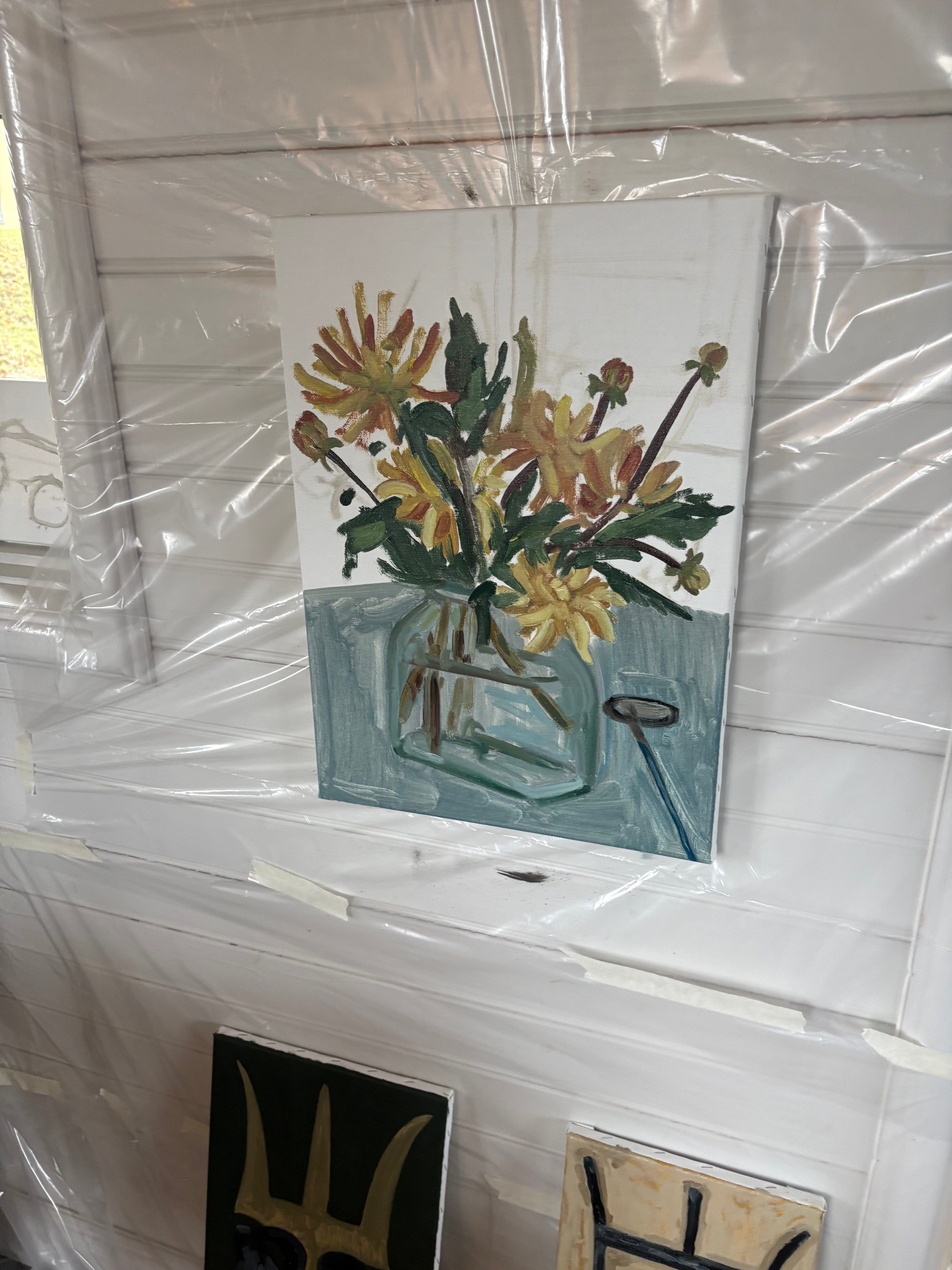
The ‘Usch och fy för höga muren,’ ‘Till nästa vår,’ ‘om gud är god,’ and ‘Björk och Lind?’
Yes. Those works were the beginning of a new direction for me. For me, they were a way to talk about my own emotions and struggles, without necessarily referring to terms from psychology or biology. Simply rearranging the narrative to begin from a pure emotional state.
Why not biology and psychology?
I think it’s uninteresting to refer to those concepts when I don’t possess them personally. Emotion is what I’m drawn to. Emotion is personal and universal at once, and there is no right or wrong when it comes to emotion.
The poet Gunnar Ekelöf had a description of the viewer and the viewer’s own role and how important it is that I really like. He wrote that meeting a work, regardless of whether it’s a poem or a book or a sculpture or whatever, should be like going to a dinner party where there is an empty chair so that the viewer can sit down and have their own interpretation of what’s in front of them. We can not forget that chair!
I think it’s uninteresting to spell things out for people. I also think that as an artist you can’t demand too much, if anything at all, from an audience. That doesn’t mean that I don’t think that you have to have faith in the viewer. And personally I dislike when a show, an exhibition or whatever does not; when you enter the white cube and there is a pile of papers about how you should feel, or what you are looking at…
At the same time though, you engage with art history and the lineage of art, but reading about it in the same room is somehow more incorrect?
Outside of the white cube, you read to acquire the tools. Or thats what I do... Once inside and in front of a piece of art it is up to you, as the viewer, to decide what tools to utilize. Or your emotional reaction will act for you. This is also why it is important for me to title my own works, to hang my own shows; so that I have full control, until I let it go and set it free in the viewer. You can not tell somebody how they feel, but a painting sure can.
By Vilda Krog
Contributor, The Art Bystander
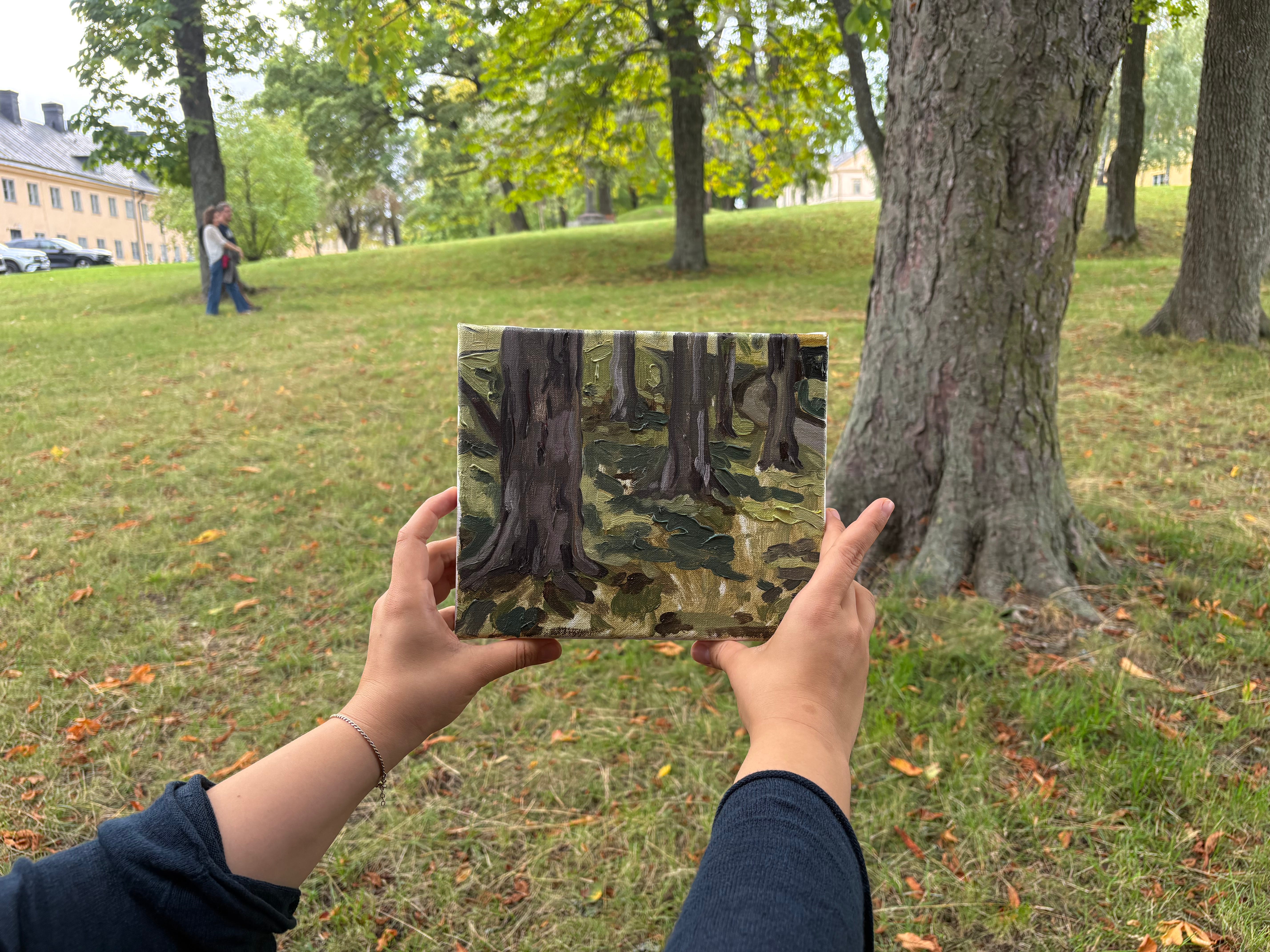
The first edition of STUGAN runs from June to September 2026 and features Olle Witt, Hanna Tordai, Hanna Zelleke Collin and Selma Morshedi.
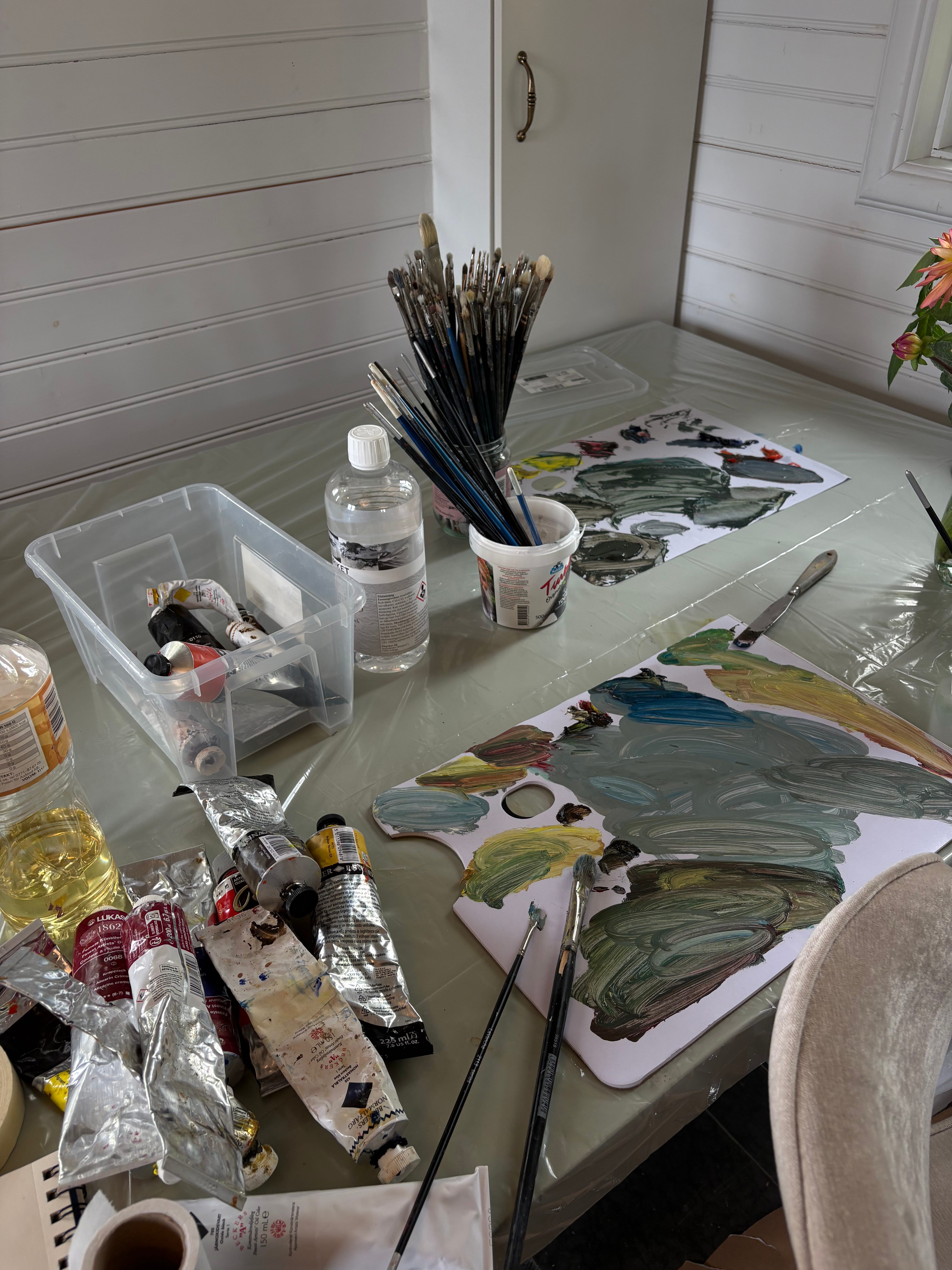
Amazing palette colors...!