

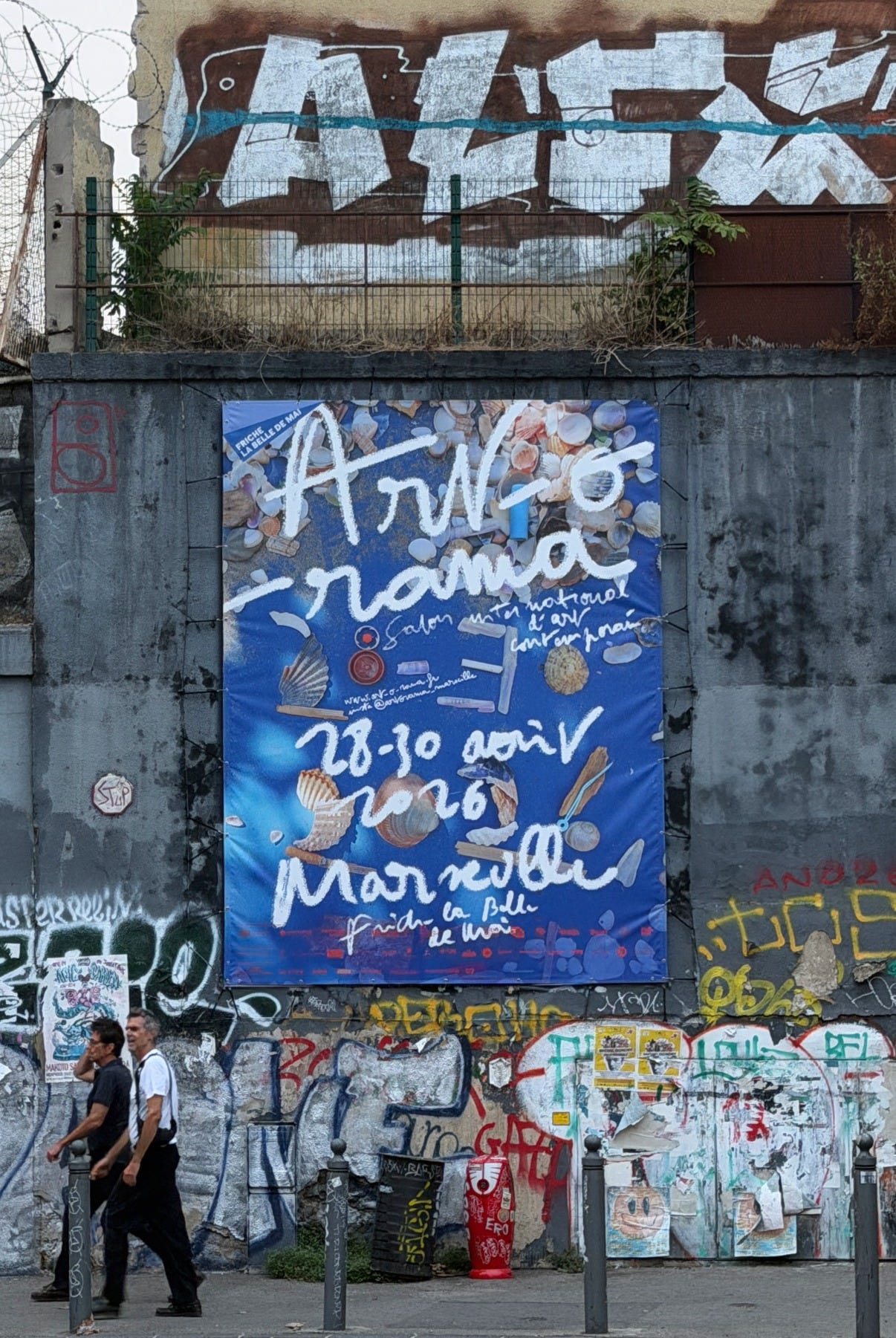
Marseille had been in my imagination long before I arrived. My great-great-grandfather was born here, a small piece of family history I had carried for years without quite knowing what to do with it, and arriving for the first time produced an unexpected intimacy, as though I had encountered a missing part of a story whose outline I already knew. I had come for Art-o-rama, ostensibly to look at a fair, meet galleries and understand a city that has become increasingly present in conversations about contemporary art, but Marseille does not remain inside the subject you have chosen for it. It keeps interrupting, widening and contradicting the frame.
People like to describe Marseille through adjectives: raw, chaotic, authentic, unruly. They are among the most exhausted words in contemporary travel and art writing, often revealing more about the visitor’s desire for picturesque disorder than about the place itself. Marseille is a port city formed through movement across the Mediterranean, through commerce, labour, migration, colonial history and its continuing afterlives, and those histories cannot be reduced to an attractive mixture of peeling façades, North African food, graffiti and sea light.
The art world has a particularly bad habit of arriving once rents have begun to rise, mistaking its own arrival for discovery, then aestheticising the very inequality that made space available in the first place. Any serious account of Marseille as an art city has to hold several realities together: the density of its cultural production, the thinness of its commercial market, the pressure on housing, the persistence of social and racial inequality, and the fact that artists and curators are now part of the forces changing the city, whether they intend to be or not.
Marseille-Provence’s year as European Capital of Culture in 2013 undeniably changed the city’s visibility and physical infrastructure. An EU evaluation counted hundreds of projects and €665 million invested in Marseille’s infrastructure, particularly the cultural venues and public spaces around the waterfront; the Mucem opened at the entrance to the port, Frac Sud gained its Kengo Kuma building and existing cultural sites received new attention and resources. Yet 2013 did not invent Marseille’s artistic life.
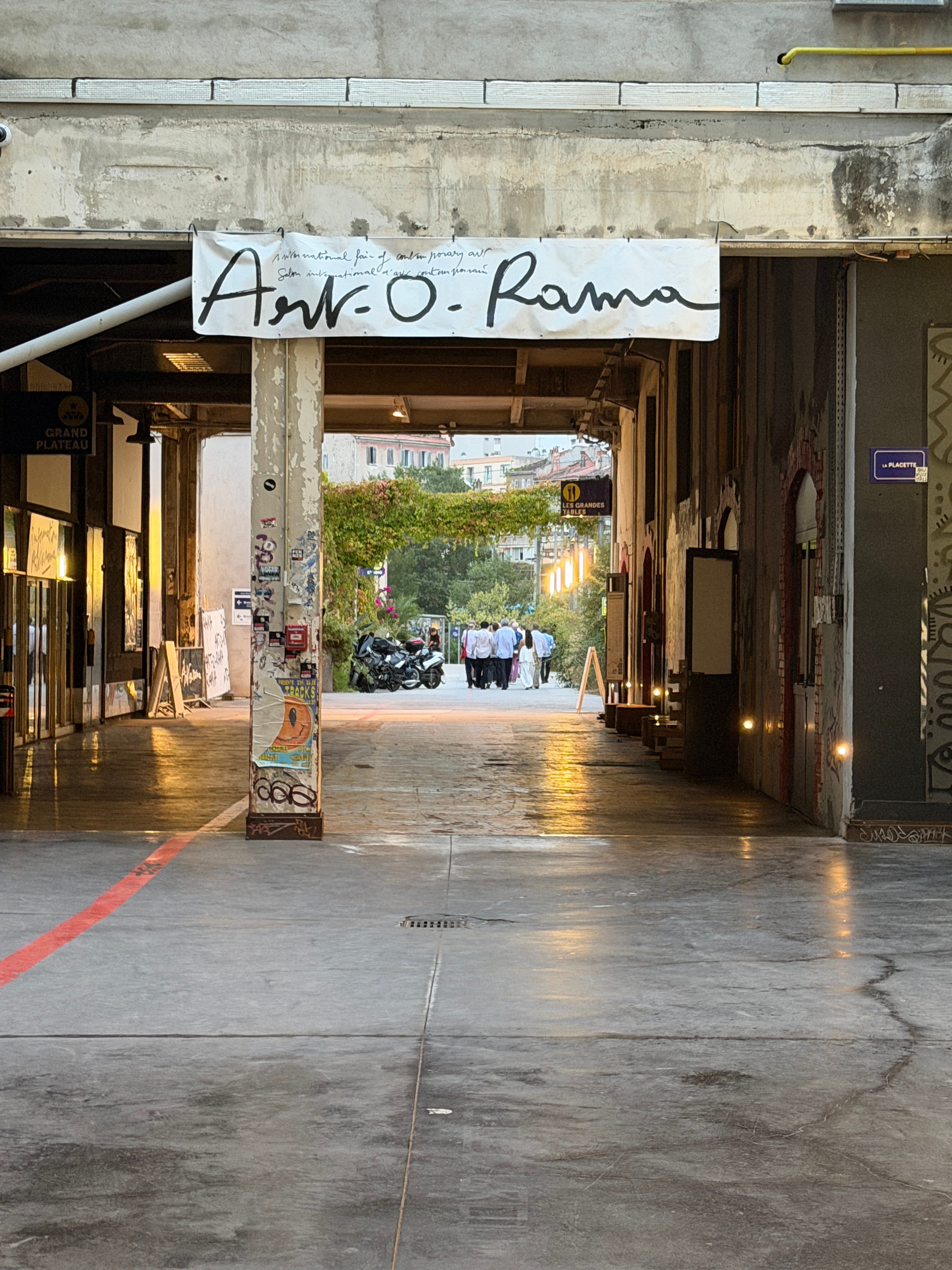
La Friche la Belle de Mai, where Art-o-rama takes place, began occupying the former Seita tobacco factory in 1992 and now brings together around seventy resident organisations and four hundred artists, producers and employees. That distinction matters. A cultural capital can be announced from above, but an art city is made over time through studios, schools, print workshops, residencies, friendships, cheap dinners, precarious spaces, failed projects, small sales and people deciding to remain.
A fair small enough to take risks
Art-o-rama was founded in 2007, carrying forward something of the experimental spirit of Art Dealers, the fair initiated in Marseille by the late gallerist Roger Pailhas in the 1990s. Held from 28 to 30 August, the 2026 event is its twentieth edition, although the fair will wait until 2027 to celebrate twenty years because the usual physical format was interrupted in 2020. It is a detail that feels appropriately Marseille: even the anniversary refuses to arrive in the expected way.
This year brought together around forty gallery participants, including the invited non-profit Pony, with nineteen galleries participating for the first time. The roster stretched from Lima, Tokyo and Sydney to Chicago, Sofia, Barcelona and Copenhagen, while more than half of the participants had been founded within the past five years. It is compact enough to see without turning looking into an endurance sport, but international enough for real differences in artistic language, geography and gallery culture to become visible.
Its compact scale has an economic logic. In 2026, gallery fees were €3,500 before tax for galleries under seven years old and €4,000 for those established for more than seven years, figures that would barely cover the furniture rental at some major fairs. Each gallery could propose its own spatial project within a maximum footprint instead of simply filling a standard booth with predictable inventory. Reduce the financial risk and a young dealer can bring a semi-animatronic theatre, an installation made from compostable food-waste bags, a performance or an artwork that may be difficult to sell, rather than six medium-sized paintings selected because they fit above a sofa and travel easily.
Not every presentation was radical, and the fair should remain alert to the quiet normalisation that can occur once an experimental event acquires a reputation and a stable format. Smallness does not guarantee courage. Yet the strongest projects at Art-o-rama felt unusually specific, often made for the fair or developed through sustained attention to a material, a political history or Marseille itself, and there was far less of the generic young-art-fair aesthetic that makes it possible to walk through fifty booths without remembering where one ends and the next begins.
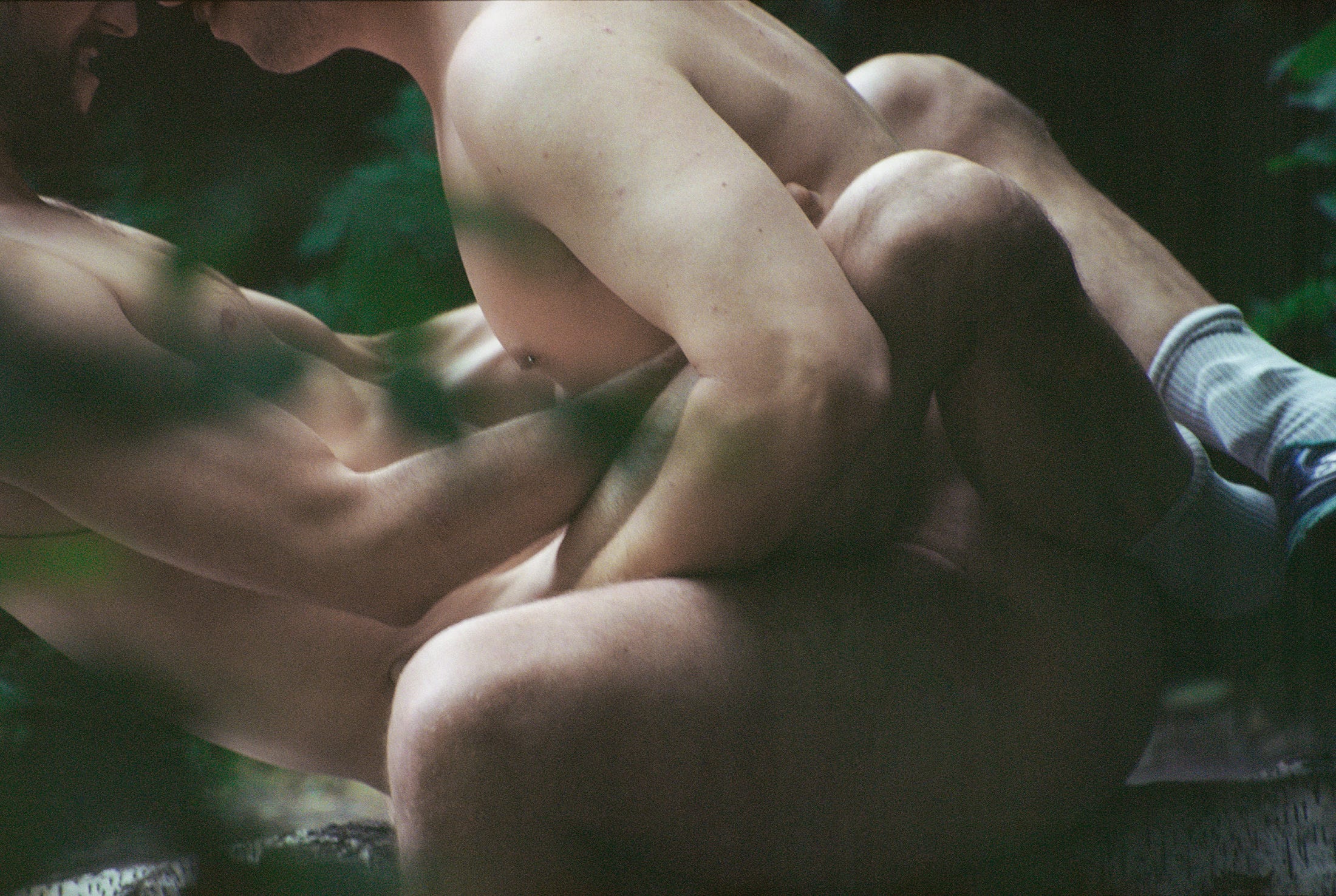
The clearest example was DITTRICH & SCHLECHTRIEM’s presentation of Lukas Städler, a new body of photographs made during a summer spent in Marseille. Städler looked at intimacy, community and queer life where the urban landscape meets the natural one, including the cruising culture around Mont Rose, and the resulting large-format images were accompanied by a signed zine produced in an edition of one hundred. The presentation gained its force from the gallery allowing Marseille to alter what it brought to the fair. Made here, through this particular summer, the photographs carried a specificity that a ready-made shipment from a Berlin storeroom never could.
At aaaa nordhavn, Copenhagen, Leo Elia staged a rusting Tin Man in a semi-animatronic theatre, pairing the character from The Wonderful Wizard of Oz with his altered counterpart in the Soviet adaptation The Wizard of the Emerald City. Three versions of the figure appeared to emerge from one another as the work moved through labour, authoritarianism, inheritance and Cold War memory.
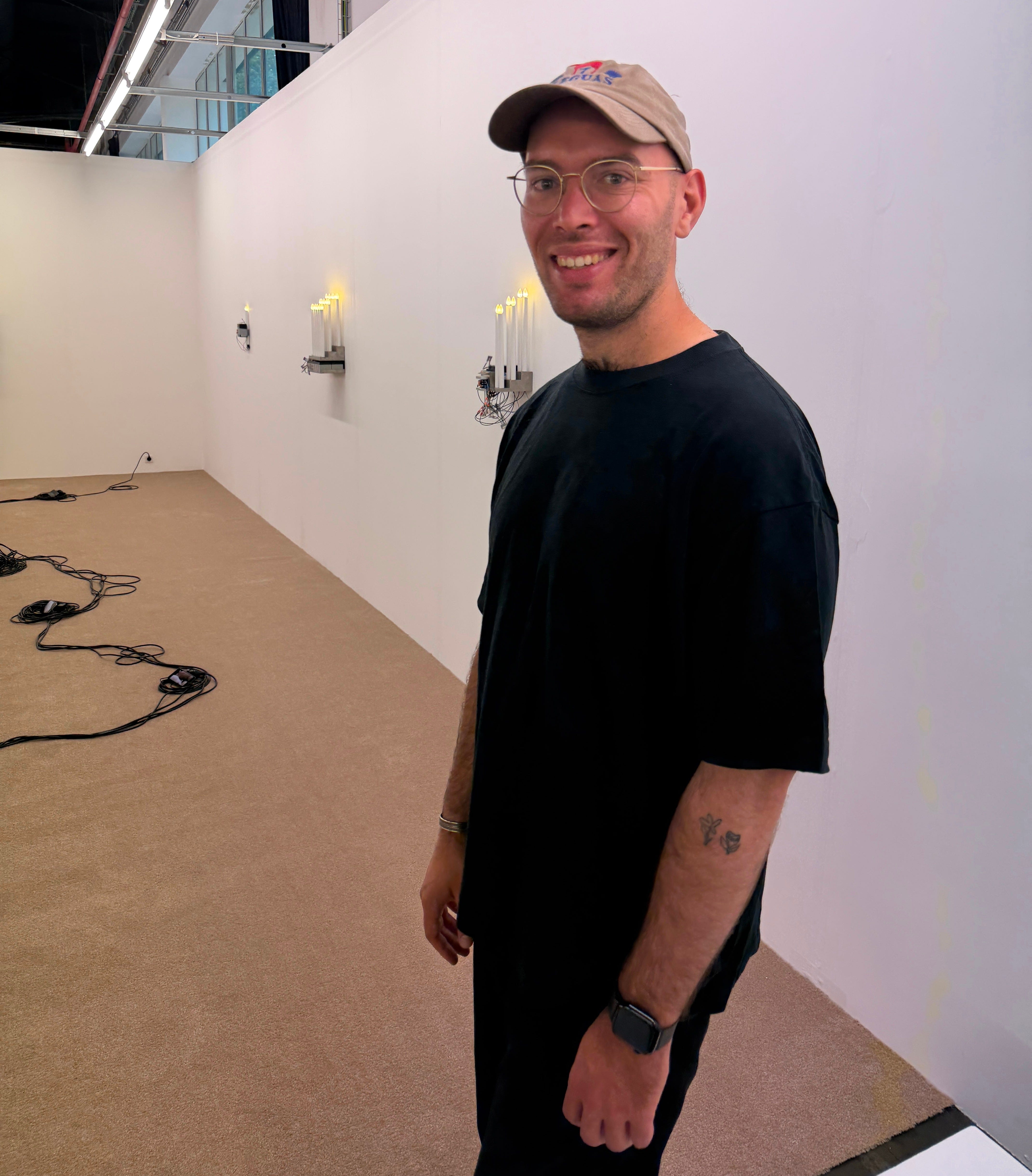
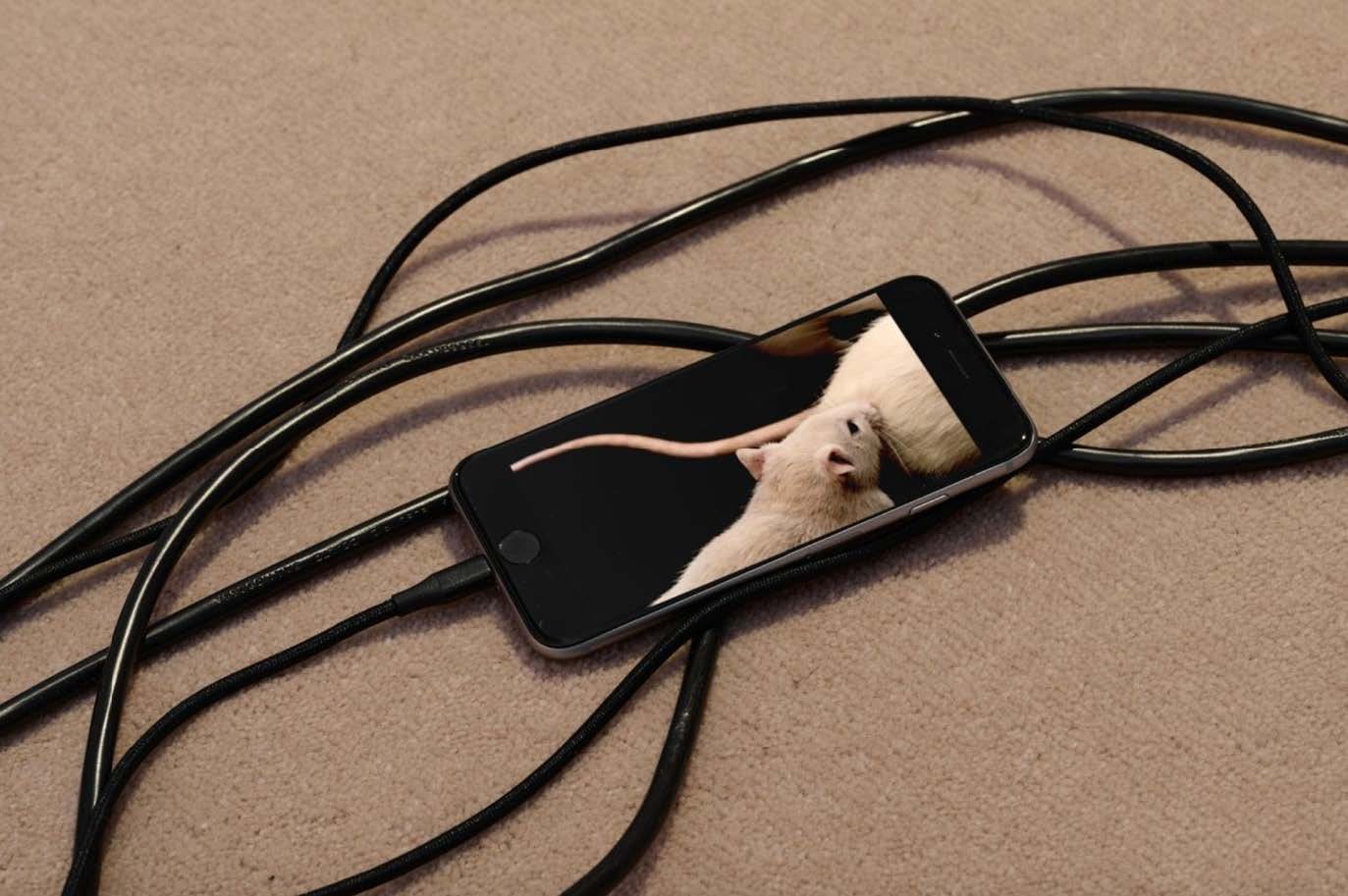
Nearby, Season 4 Episode 6 and LAILA brought together Christina May Carey’s cluster of iPhones and iPads playing loops of rats’ tails, their cables spilling across the floor, with Michael Sandford’s laborious unfixed chalk sculptures derived from compromised CCTV feeds. Both presentations made technology feel bodily, exhausted and quietly menacing.
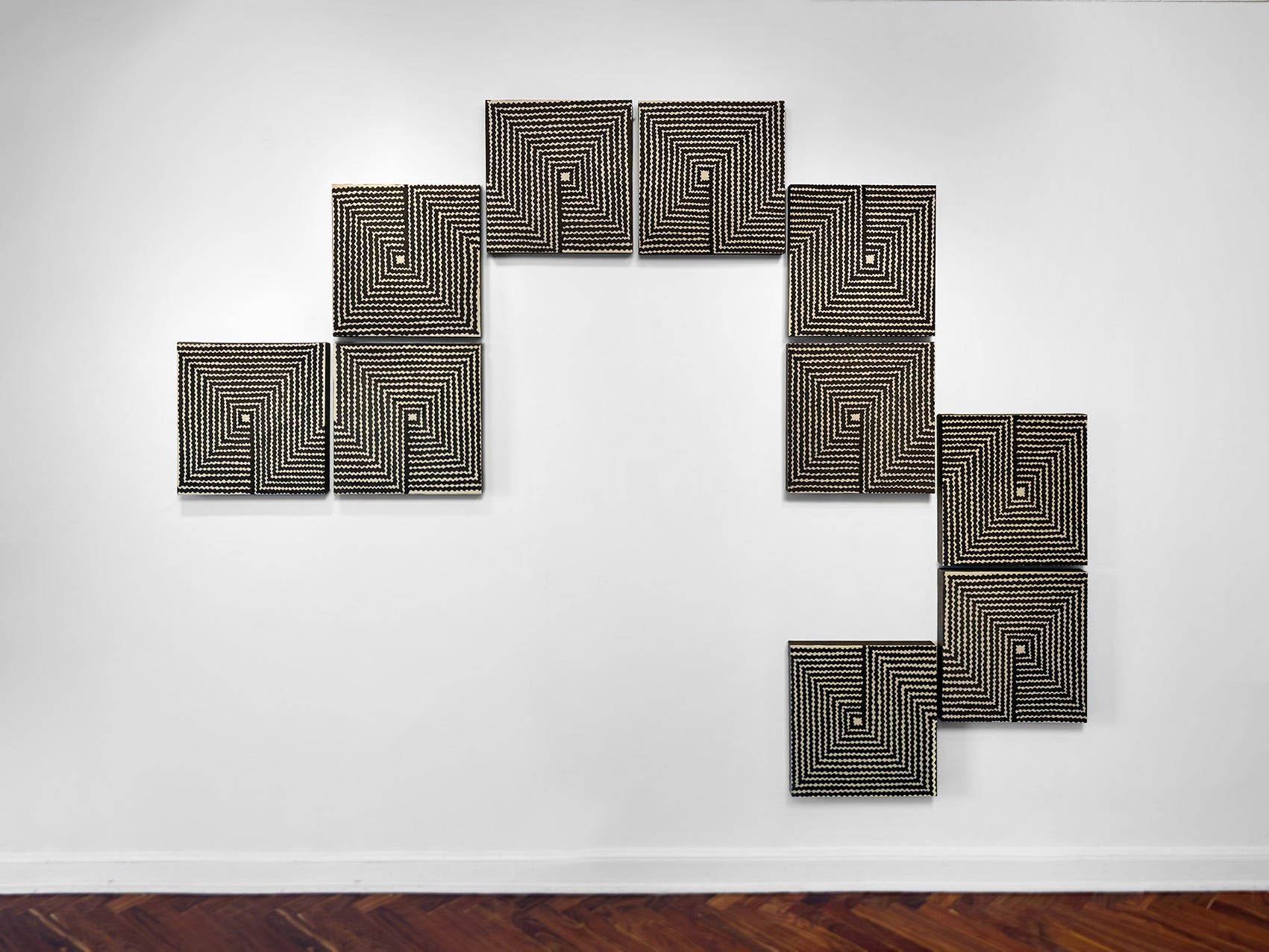
The fair’s expanded geography was most persuasive when it produced a genuinely different material intelligence instead of a list of international postcodes. At mueve galería, a first-time Art-o-rama participant from Lima, the work of Neyra Pérez grew from Iskonawa visual knowledge and the river as a living system, while Katherinne Fiedler followed the buried Bièvre through Paris.
The invited non-profit Pony showed Solveig Burkhard’s Kids Return, a ruined child’s bedroom populated by rusted furniture, personal remnants, ceramic replicas and photographs connected to Chernobyl and Fukushima, an environment that was disturbing precisely because it remained open to play.
Marseille’s own galleries were few but important. At sissi club, Joshua Merchan Rodriguez used copper in a site-specific installation and a series of heliogravures, treating conductive metal as something that preserves and connects but can also alter and contaminate the historical and political knots it passes through.
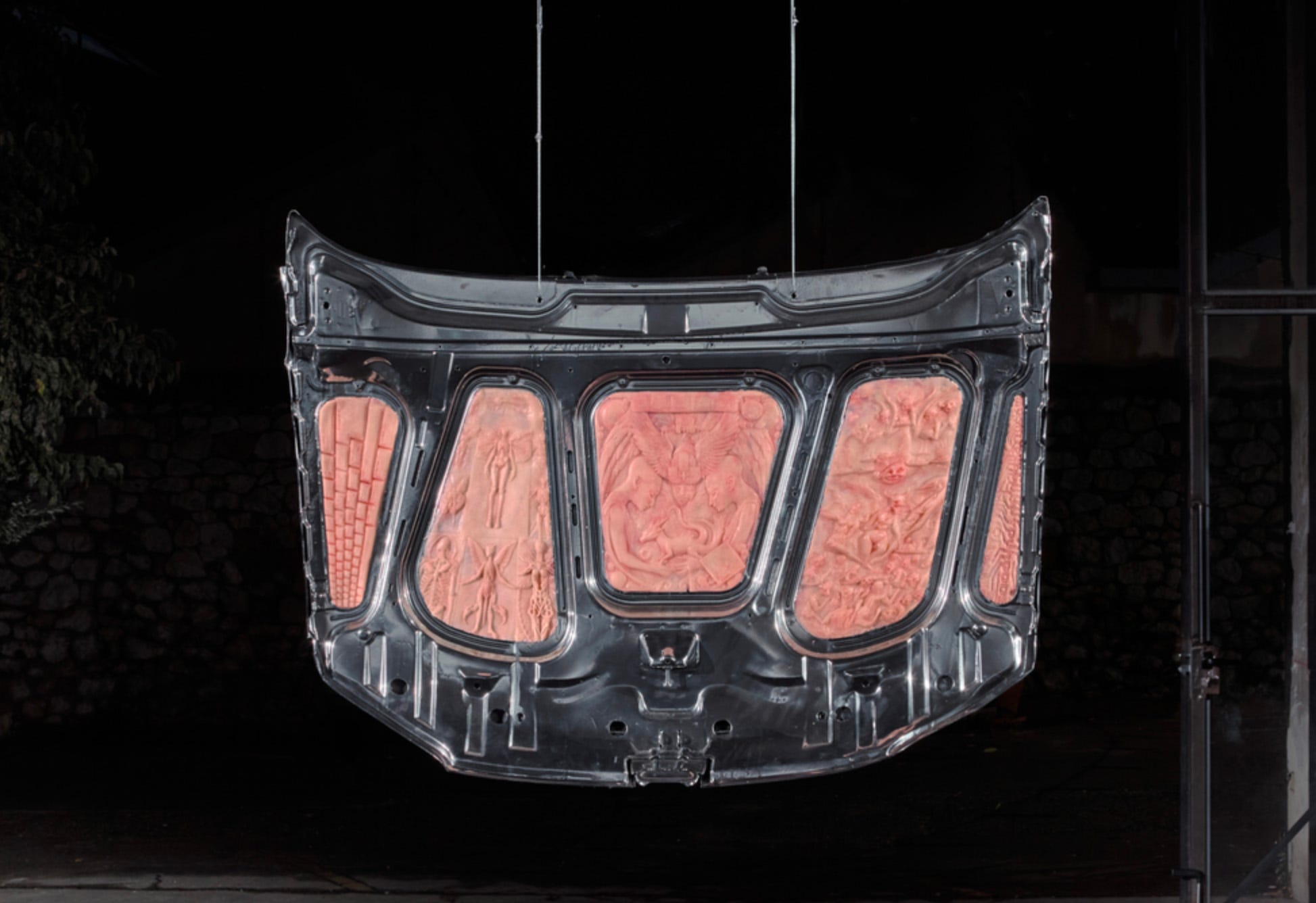
Spiaggia Libera and Punta Gallery built a physical dialogue between Marseille and Sofia through Elvire Ménétrier, Slava George and Veronika Desova: a car bonnet carrying prosthetic silicone forms, paint made with blood-derived pigment, glass, gilded water and an olfactory sculpture containing pheromones, sweat, tears and seawater. In each case, the artistic proposition determined the space.
The city beyond the fair
An art fair, however good, does not make an art city. What makes Marseille convincing is the network outside La Friche, much of it operating between commercial gallery, non-profit organisation, domestic space, publishing project, bar, studio and temporary alliance. Categories remain porous because they have to; the scene’s inventiveness is inseparable from its limited resources.
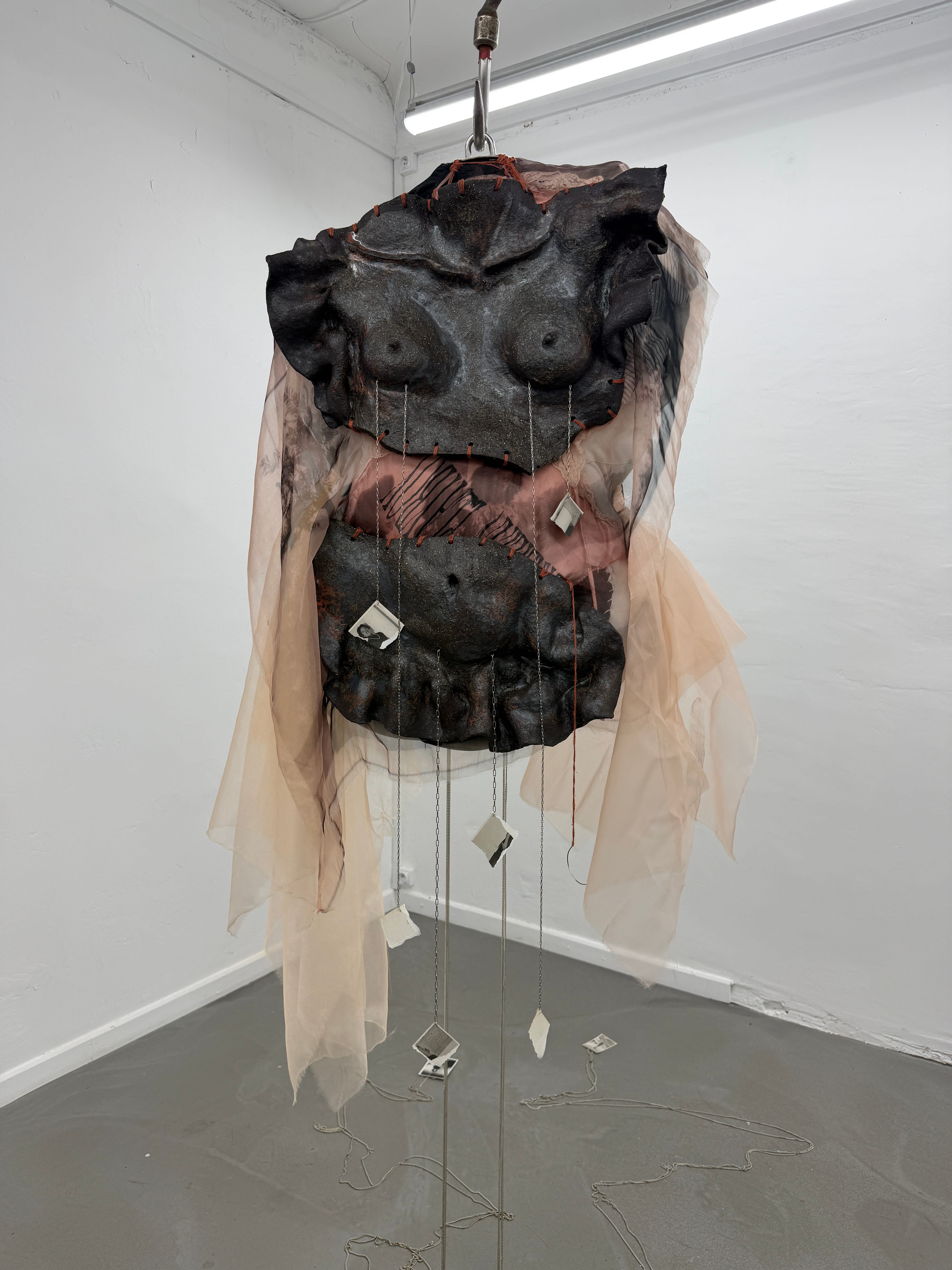
sissi club is perhaps the clearest local model. Founded in 2019 by Élise Poitevin and Anne Vimeux as a non-profit initiative, it has developed into three connected parts: a commercial gallery, a curatorial and research space deliberately kept outside the immediate logic of the market, and shared artist studios. Many of its artists have been followed from their first solo exhibitions, and its programme repeatedly returns to questions of representation, power and the economics through which contemporary art is produced. During Art-o-rama week, the gallery opened Silken Chimeras: Chronicles of desire, Caroline Ricca Lee’s first European solo exhibition, in which inherited clothing, family photographs, ceramics, fishing nets and other fragments of Chinese, Japanese and Brazilian diasporic history become unstable structures of memory.
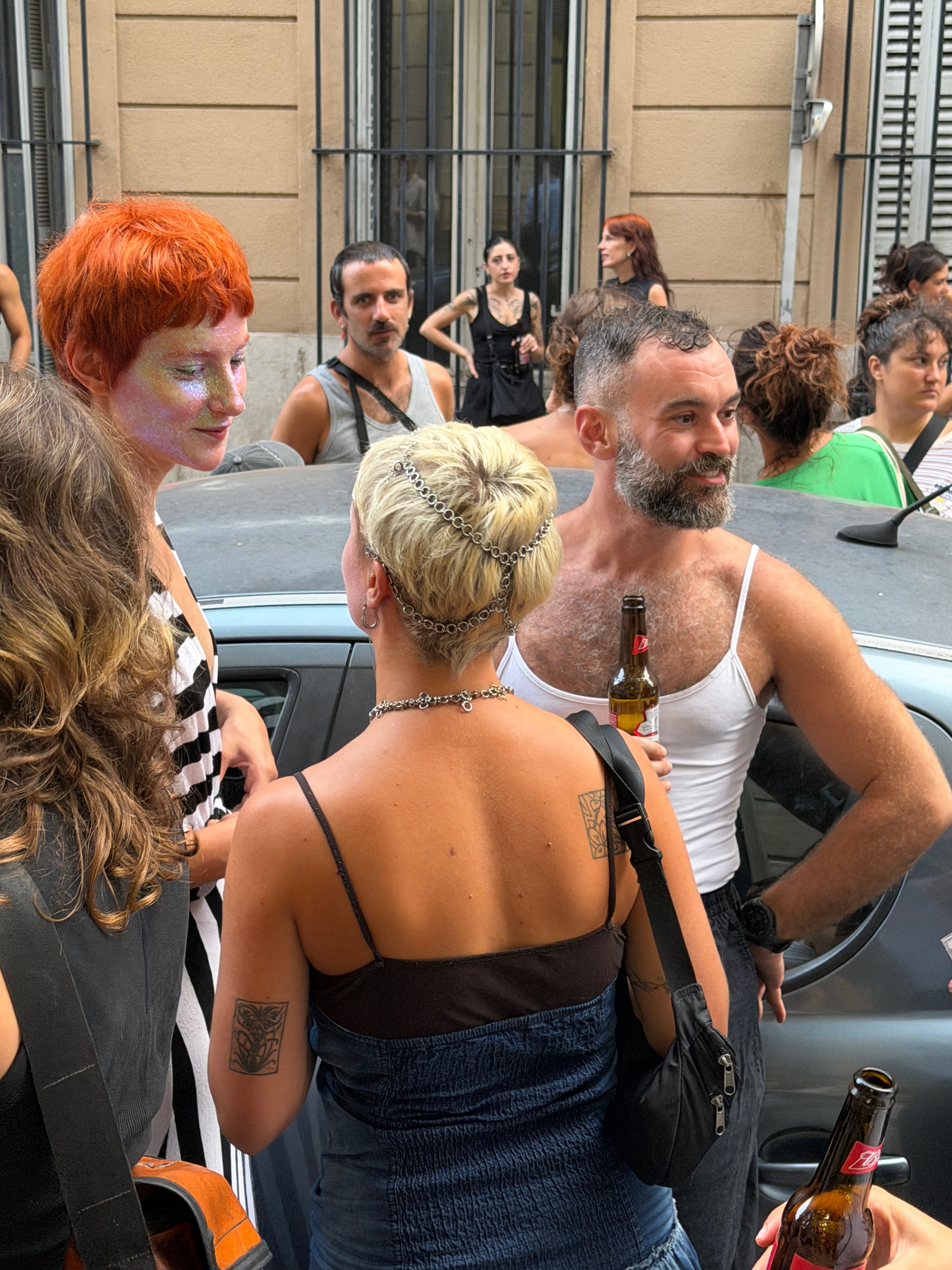
A short walk away at 39 rue du Coq, SPF50 opened in August 2025 as a non-profit exhibition and curatorial research space, with David Pons shaping an annual programme that also gives writing, poetry and publishing a serious role. Its current exhibition, Le temps d’attendre, brings together Antonin Sambussy, Fanette Lambey, Kim Farkas, Shanna Warocquier, Yi Ye and Xolo Cuintle, and opened with a performance by Aguila Leite that turned waiting from dead time into a social and bodily condition.
At number 10 on the same street, MADMAX opened publicly during this year’s Art-o-rama, founded by the architect-trained Maxime Vignolles with a programme developed in collaboration with Pons. It occupies 170 square metres across two floors of a Belle Époque townhouse that housed the private bank Zarifi & Cie for almost a century; Atelier Aïno’s conversion has retained elements introduced by the decorator Jacques Quinet in the 1960s.
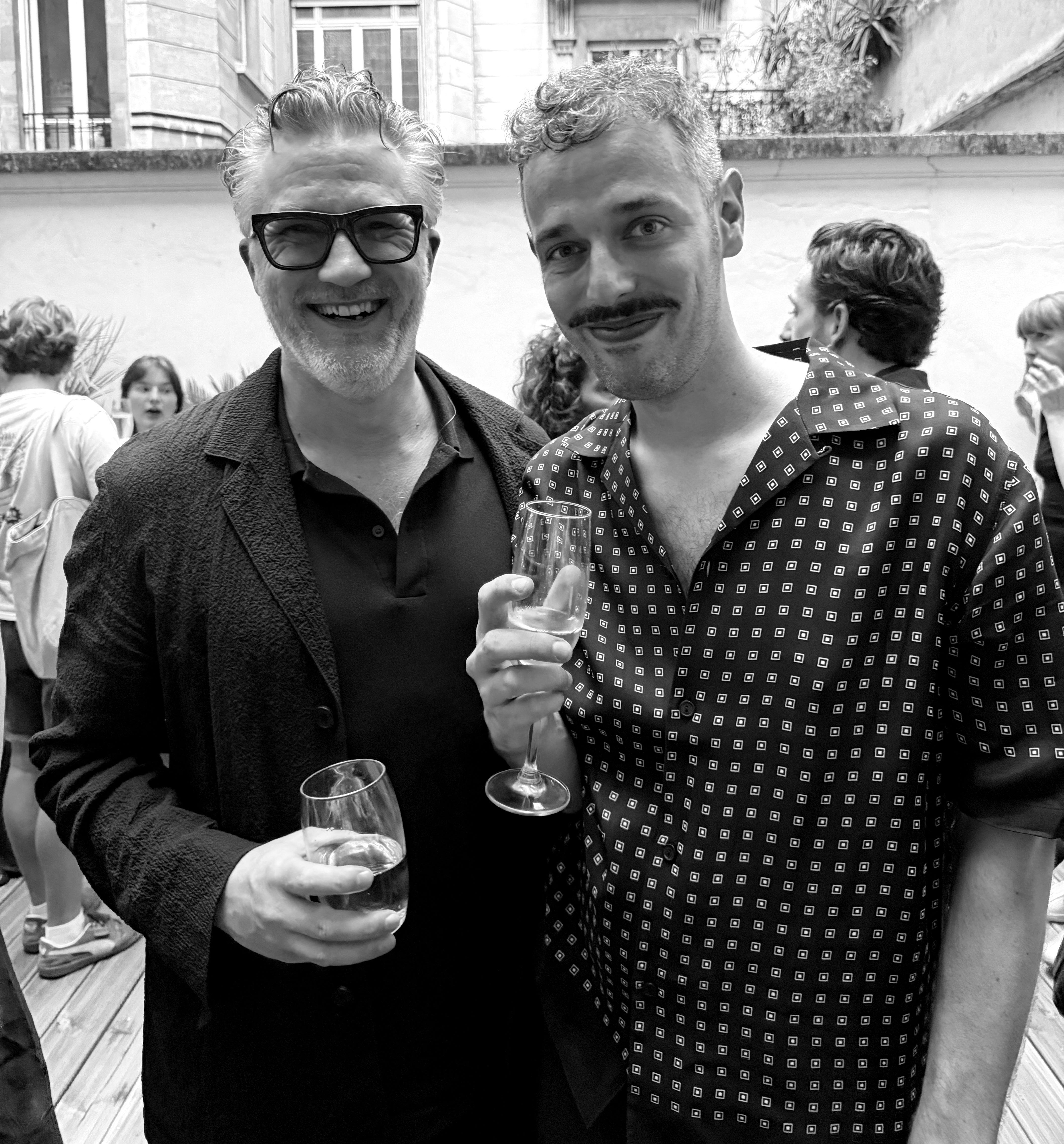
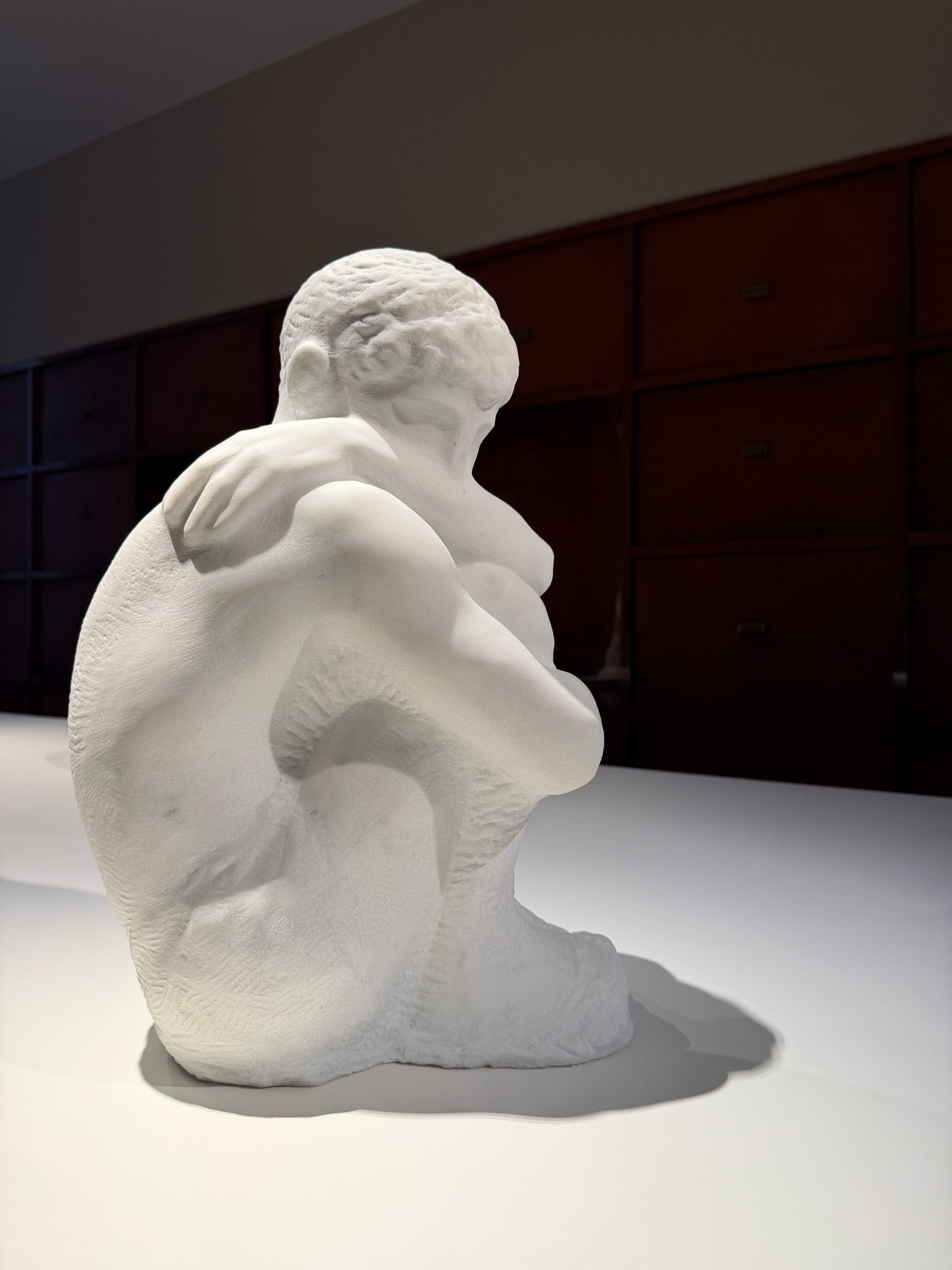
The symbolism is almost too perfect: a former bank becoming a gallery just as Marseille accumulates new cultural capital. Its inaugural exhibition, Unfinished, presents Matouš Háša’s hand-carved marble figures through the tradition of non-finito, his first solo show in France. The building is impressive, but the more consequential question will be how this new commercial space builds relationships with the ecology already around it.
SYSTEMA makes the scene’s financial structure visible. Founded in 2021 by Marseille-based initiatives Giselle’s Books, Gufo and Voiture 14, it convenes independent, artist-run and curator-run organisations each year inside Palais Carli, the city’s former art school. Its organisers speak directly about rising operating costs and declining funding, and the annual gathering gives fragmented or isolated practices a collective public presence. An off-scene survives through organisation as much as attitude.
The network continues across the city. Giselle’s Books treats publishing, archives, exhibitions and residencies as parts of one artistic practice. SOMA at Cours Julien moves between visual art, performance, music, film and a bar without forcing them into separate programmes. Tchikebe is a 400-square-metre cooperative print workshop and publisher where artists work through the technical and social possibilities of the edition.
In Belle de Mai, Le Couvent occupies a former convent with studios, chapels and a garden, while the new Artagon hangar gives emerging artists and collectives room to produce rather than simply exhibit. Further north, Ateliers Jeanne Barret is worth the journey precisely because it pulls the visitor beyond the increasingly polished central and coastal circuit.
The sea inevitably changes how art is encountered here, although it should not become another marketing device. Spiaggia Libera occupies a three-storey house at Malmousque, where appointments unfold at a domestic pace rather than according to the choreography of a white cube. Nearby, La Traverse combines exhibitions, design and hospitality in a house above the cove; its current presentation of Arnaud Eubelen transforms discarded urban materials into low-tech, retrofuturist furniture. These spaces are beautiful, but their real interest lies in the time they permit: art enters a conversation, a room, a meal and a view without becoming indistinguishable from lifestyle.
The institutional route begins at La Friche, where Zineb Sedira’s Les rêves n’ont pas de titre adapts her 2022 French Pavilion for its first presentation in France, folding cinema, Algerian independence, migration and autobiography into a full-scale set; Mona Benyamin at Triangle-Astérides uses sitcom, music-video, news and horror conventions to approach Palestinian dispossession and inherited trauma through the recurring presence of her parents; and Abdessamad El Montassir considers the Sahara as a living archive in which plants, stones, sand and wind carry histories that official narratives suppress. Together, they form a more complicated account of the Mediterranean than any thematic branding campaign could manage.
At the Mucem, Clément Cogitore’s Ferdinandea, l’île éphémère begins with the volcanic island that surfaced between Sicily and Tunisia in 1831 and was immediately claimed by European powers, turning a geological event into a sharp story about colonial appetite, territory and imagined futures. Frac Sud is showing Japanese practices shaped by post-Fukushima questions of ecology and memory, while the mac pairs a triennial drawn from more than seventy private collections with Louisa Babari’s AFRICA, an excavation of North African image histories, archaeology and postcolonial memory.
Inside the Cité Radieuse, Kolektiv’s PRODUKTION/REPRODUKTION brings Lucia Moholy into dialogue with Missing Archives until 24 October, giving the trip south a current exhibition as well as Le Corbusier’s architecture.
Jérôme Pantalacci has described Marseille as a vibrant scene without a real market. PLUG: Listen to my podcast episode with him:
That tension should not be romanticised. Artists need buyers, galleries need sales, institutions need public money and independent spaces need more than goodwill, yet the market that might stabilise the scene can also accelerate the loss of affordable space on which much of it depends. Marseille’s next test is to build a stronger economy for art without surrendering the openness, collaboration and productive friction that made the scene interesting in the first place.
Art-o-rama’s low fees, high turnover of young galleries and relationship to Marseille’s studios and institutions allow the fair to work as a meeting point. I came to Marseille to see Art-o-rama; by the end, the useful map was no longer the floor plan of the fair but the routes between La Friche, rue du Coq, Palais Carli, Joliette and Malmousque, because the city’s art life is carried in those distances and by the people continually crossing them.
A working Marseille art map
La Friche la Belle de Mai, 41 rue Jobin: Begin here for Art-o-rama and the exhibitions by Zineb Sedira, Mona Benyamin and Abdessamad El Montassir, then see Glaneuses et glaneurs, the 2026 Beaux-Arts de Marseille graduates, and Unworlding from The Racial Imaginary Institute.
Réformés and rue du Coq: Visit sissi club at 16 cours Joseph Thierry, SPF50 at 39 rue du Coq and the newly opened MADMAX at number 10. Add Médusa – Art-cade at 17 rue Flégier, Fotokino at 33 allées Léon Gambetta and the two Giselle’s Books sites, checking their current programmes and opening times first.
Cours Julien: SYSTEMA is an annual event rather than a permanent venue, held during Art-o-rama at Palais Carli. Year-round, look at SOMA and the surrounding independent programme.
Joliette, Panier and J4: Walk from Frac Sud to the Centre de la Vieille Charité and the Mucem, adding Tchikebe during an advertised opening or by appointment. CIRVA is crucial to the city’s glass culture but is not normally open for casual visits, so encounter its production through artists’ exhibitions or advertised open days.
Malmousque: Book Spiaggia Libera in advance, then continue to La Traverse after checking its current opening times. This is the point where Marseille’s domestic, design and gallery cultures meet the sea without requiring an entire day of travel.
Belle de Mai and beyond: Add Le Couvent, Artagon’s Hangar Belle de Mai during public open days and, further north in the 15th arrondissement, Ateliers Jeanne Barret by appointment or for announced events. These are the places that prevent a tour of Marseille art from becoming only a tour of central property values.
South Marseille: Pair the Cité Radieuse and Kolektiv with the mac and, for design history, Château Borély. Check MAMO’s current programme and access before travelling, as the rooftop and residential building have separate arrangements. It is a separate half-day and worth treating as one.
One more fair: Paréidolie at Château de Servières is Art-o-rama’s smaller drawing-focused counterpart, bringing seventeen galleries into a much more concentrated conversation around works on paper.
By Roland-Philippe Kretzschmar
Founder, The Art Bystander
Hola , Gracias Por Compartir Tanto Arte , En Este Excelente Ensayo. Un Saludo.